Skilled nursing facilities (SNFs) are under more pressure than ever. Shrinking margins, staffing shortages, evolving reimbursement models, and stricter compliance requirements have turned technology from a “nice to have” into a business-critical investment. Yet many organizations still struggle to get value from their SNF IT solutions.
Instead of enabling efficiency, disconnected systems create data silos, manual work, and operational blind spots. To move forward, SNFs must rethink their approach to technology not as individual tools, but as a cohesive, integrated ecosystem.
This blog explores the common problems with today’s SNF IT solutions, the pitfalls to avoid, and a smarter roadmap for building a future-ready skilled nursing facility technology stack.
The Current State of SNF IT Solutions
Most SNFs have accumulated technology over time. A billing system here, an EHR there, a separate staffing tool, and standalone finance or reporting platforms. While each solution may work individually, together they often fail to operate as a unified system.
As a result, leadership teams struggle with:
- Limited visibility across clinical, financial, and operational data
- Manual reconciliation between systems
- Delayed reporting and compliance risks
- Low user adoption due to complex workflows
This fragmentation is one of the biggest barriers to SNF digital transformation strategies today.
Common Problems with Traditional SNF IT Solutions
1. Disconnected Core Platforms
Many SNFs rely on multiple vendors for EHR, billing, payroll, procurement, and analytics. Without comprehensive SNF EHR and IT integration, data must be manually transferred or reconciled—leading to errors and delays.
2. Limited Scalability
Legacy systems weren’t designed for modern skilled nursing facility IT infrastructure needs. Adding new facilities, services, or reporting requirements often means adding more tools instead of improving the existing stack.
3. Poor Decision-Making Data
When data lives in silos, leadership cannot access real-time insights. This makes it difficult to optimize staffing, manage costs, or respond proactively to compliance risks.
4. Vendor Lock-In
Many SNFs feel stuck with outdated systems because switching appears risky, expensive, or disruptive—especially without a clear IT roadmap for skilled nursing facilities.
Key Pitfalls SNFs Should Avoid
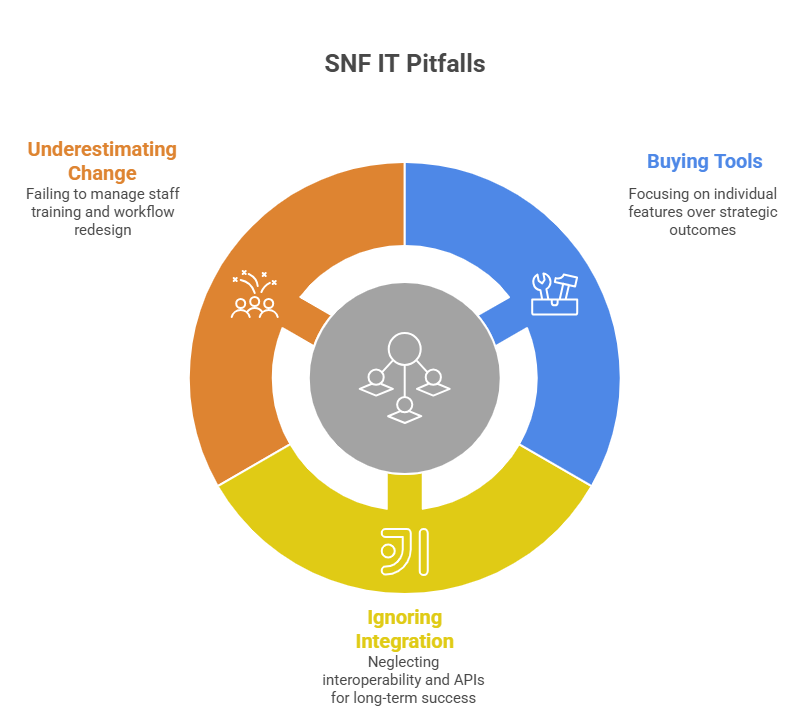
Buying Tools Instead of a Strategy
One of the biggest mistakes in buying SNF IT solutions for operations is focusing on individual features instead of end-to-end workflows. Technology decisions should be driven by outcomes, not vendor demos.
Ignoring Integration Capabilities
A SNF software system comparison B2B approach must go beyond pricing and UI. APIs, interoperability, and integration support are critical for long-term success.
Underestimating Change Management
Even the best SNF IT solutions fail if staff are not trained, workflows are not redesigned, and adoption is not actively managed.
What Are the Best SNF IT Solutions for Skilled Nursing Facility Core Platforms?
There is no single “best” system for every SNF. However, the best SNF IT solutions for core platforms share common characteristics:
- Modular architecture that supports growth
- Native or seamless integration across EHR, finance, and operations
- Strong reporting and analytics capabilities
- Compliance-ready workflows aligned with CMS requirements
- Vendor support that understands SNF-specific challenges
Evaluating SNF technology vendors in 2026 requires looking at how well their platforms support integration and long-term transformation not just current needs.
How to Build a Modern and Integrated SNF Technology Stack
A skilled nursing facility technology stack guide should focus on alignment, not accumulation. A modern stack typically includes:
- Core EHR platform with interoperability
- Revenue cycle and billing systems integrated with clinical data
- Workforce and staffing tools connected to census and acuity
- Financial and procurement platforms tied to real-time usage
- Analytics and reporting layer spanning all systems
This approach enables SNFs to move from reactive operations to proactive management.
What Are the Essential Features of Comprehensive SNF EHR and IT Integration?
Comprehensive integration goes beyond data exchange. Essential features include:
- Real-time data synchronization
- Role-based dashboards for leadership and staff
- Automated workflows across departments
- Centralized audit trails for compliance
- Secure data governance and access controls
These features directly support operational efficiency and regulatory readiness.
How Can SNF IT Infrastructure Improve Operational Efficiency?
A modern SNF IT infrastructure improves efficiency by:
- Reducing manual data entry and reconciliation
- Improving staff productivity and satisfaction
- Enabling faster, more accurate reporting
- Supporting better clinical and financial decisions
The benefits of integrated SNF IT platforms for B2B organizations are especially clear at scale, where even small inefficiencies multiply across facilities.
SNF Technology Trends Shaping the Future
Top SNF technology trends in healthcare include:
- Platform consolidation over point solutions
- AI-driven analytics and forecasting
- Cloud-based deployment models
- Interoperability-first architectures
- Greater focus on ROI and measurable outcomes
These trends reinforce the need for a strategic, long-term approach to technology.
Build a Smarter SNF IT Foundation
Modern SNF IT solutions aren’t about adding more software they’re about creating clarity, control, and scalability across your operations.
If your facility is struggling with disconnected systems, manual workflows, or limited visibility, it may be time to rethink your technology approach.
Start with a strategic assessment of your current SNF IT landscape.
Identify integration gaps, eliminate redundancies, and design an IT roadmap aligned with your clinical, financial, and operational goals.
Whether you’re evaluating new platforms, planning a system consolidation, or preparing for future growth, the right SNF IT strategy can unlock measurable improvements in efficiency, compliance, and performance.
The smarter way forward starts with the right foundation.
Author – Sushrut Ujjainkar
Read our next blog – Click here