

Singapore stands at the crossroads of global commerce, serving as both a regional hub for multinational corporations and a trusted financial center. Its regulatory environment is widely recognized as one of the most sophisticated in Asia, combining local legal rigor with international best practices. In this landscape, procure-to-pay (P2P) compliance and control play a vital role in ensuring transparency, trust, and governance excellence.
From vendor selection to final payment, every step in the P2P cycle must adhere to Singapore’s high standards of accountability. The stakes are high: businesses that maintain exemplary audit trails and compliance systems not only satisfy local regulators but also strengthen their credibility with global partners and stakeholders.
The Compliance Landscape in Singapore
Singapore’s corporate governance model emphasizes accountability, transparency, and risk management. Businesses here face a dual expectation:
- Local Regulatory Adherence – Ensuring compliance with rules set by the Inland Revenue Authority of Singapore (IRAS), Accounting and Corporate Regulatory Authority (ACRA), and Monetary Authority of Singapore (MAS).
- International Standards Alignment – Demonstrating compliance with global norms such as OECD transfer pricing guidelines, IFRS accounting standards, and anti-money laundering directives.
As regional headquarters, many Singapore-based companies oversee operations across Asia, which adds another layer of complexity—ensuring compliance across multiple jurisdictions while maintaining consistent, centralized governance.
Key Compliance Challenges for Singapore Businesses
- Multi-Jurisdictional Compliance
Companies operating regionally must align P2P processes with diverse regulatory frameworks in neighboring countries while ensuring reporting consistency from Singapore. - Audit Trail Completeness
Audit trails must meet dual demands: local statutory audit requirements and international best practices demanded by global investors and regulators. - Transfer Pricing & Related Party Transactions
Singapore’s strict transfer pricing regulations require comprehensive documentation to prove arm’s length dealings, especially in related party transactions. - Transparency for Multiple Stakeholders
Businesses must satisfy the expectations of Singapore regulators (ACRA, MAS, IRAS), while also providing clarity to international auditors, investors, and tax authorities.
Why Traditional Compliance Methods Fall Short
Despite Singapore’s strong governance culture, many organizations still rely on manual compliance processes. The risks include:
- Fragmented records across regional offices.
- Difficulty in reconciling audit trails for complex related party transactions.
- Delays in meeting MAS or IRAS reporting deadlines.
- Increased exposure to compliance failures in fast-changing regional environments.
These gaps create vulnerabilities in fraud detection, raise audit costs, and hinder the ability to scale operations.
How Automated P2P Compliance Systems Strengthen Adherence
Modern P2P compliance platforms offer intelligent, automated solutions that match Singapore’s high governance expectations:
- Multi-Jurisdictional Compliance Monitoring
Systems can adapt to the tax, audit, and reporting requirements of multiple Asian jurisdictions, ensuring seamless consolidation into Singapore HQ records. - Automated Audit Trails
Every transaction—from procurement request to supplier payment—is automatically recorded, time-stamped, and linked to supporting documents, creating a robust, tamper-proof audit trail. - Fraud Detection & Risk Controls
AI-driven anomaly detection flags unusual patterns, helping businesses mitigate procurement fraud or suspicious payments that may trigger AML concerns. - Real-Time Compliance Reporting
Automated dashboards provide live reporting for GST filings, MAS reporting obligations, and transfer pricing documentation requirements.
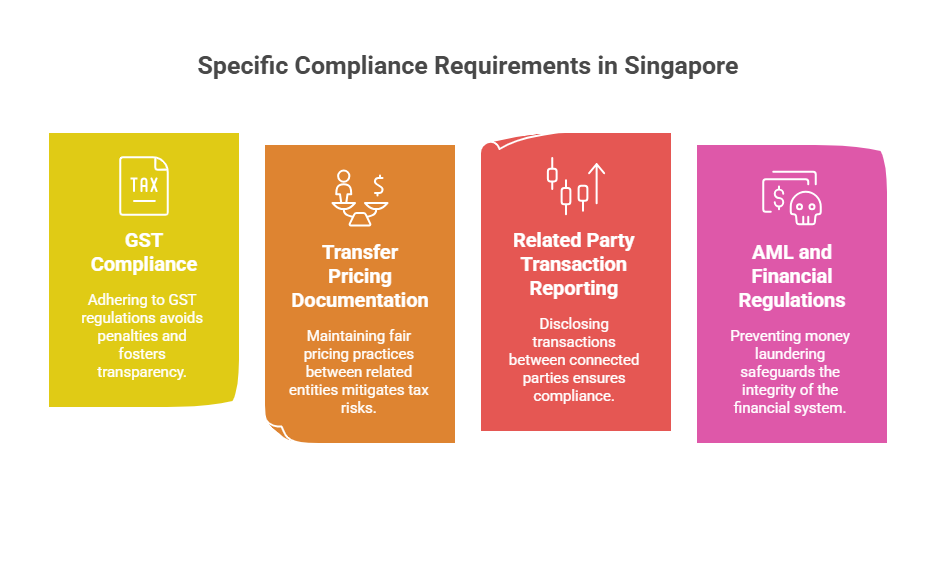
Specific Compliance Requirements in Singapore
- GST Compliance
Automated invoice validation ensures GST records are accurate, supporting seamless submission to IRAS and reducing risk of filing errors. - Transfer Pricing Documentation
Automated systems consolidate related party transaction data across regions, generating documentation aligned with both IRAS and OECD guidelines. - Related Party Transaction Reporting
Transparent, system-generated reports ensure compliance with ACRA disclosure requirements. - AML and Financial Regulations
Automated P2P workflows embed customer/supplier due diligence, transaction monitoring, and suspicious transaction reporting to meet MAS expectations.
Sector-Specific Considerations
- Financial Services
Compliance systems integrate with MAS regulatory frameworks, ensuring transparent procurement, expense management, and AML adherence for banks, insurance, and investment firms. - Manufacturing
P2P platforms capture supplier contracts, environmental compliance documents, and workplace safety certifications, supporting Singapore’s strong sustainability and safety standards. - Logistics & Trade
Automated systems streamline customs documentation, import/export compliance, and regional shipping records—critical for Singapore’s role as a global logistics hub. - Technology Companies
With data privacy and cross-border transfer rules in focus, automated P2P compliance ensures records align with Singapore’s Personal Data Protection Act (PDPA) and international regulations like GDPR.
Implementation Strategies for Singapore Businesses
Singapore offers a unique advantage: advanced technological infrastructure and strong government support for digital innovation. To maximize the impact of P2P compliance systems, businesses should:
- Leverage Integration with Digital Government Services
Align P2P platforms with IRAS GST reporting, ACRA BizFile+ submissions, and MAS compliance portals. - Enable Regional Scalability
Deploy multi-entity and multi-currency capabilities to manage compliance across diverse Asian markets from Singapore HQ. - Embed Governance Culture
Train multicultural teams to adopt automated workflows, ensuring both efficiency and adherence to Singapore’s governance standards. - Future-Proof Compliance Systems
Ensure platforms are adaptable to emerging areas such as ESG reporting, digital banking compliance, and cross-border tax reforms like BEPS 2.0.
Compliance as a Growth Enabler
For Singapore businesses, robust P2P compliance and control systems go beyond regulatory adherence—they create a platform for regional leadership. By adopting automated compliance solutions, organizations can:
- Ensure transparency and accountability across operations.
- Meet Singapore’s demanding governance standards with confidence.
- Build credibility with regulators, investors, and global partners.
- Scale operations across Asia without sacrificing control or oversight.
In a market where governance excellence is both a necessity and a differentiator, strong P2P compliance frameworks empower Singapore businesses to achieve sustainable growth, regional influence, and world-class operational standards.
Read our next blog – Click here