
Operational Insight · Intake Optimization
From Hours to Minutes: How AI-Powered Chart Review Is Redefining Patient Admission in Post-Acute Care
You know that moment — a referral lands at 4:45 PM on a Friday, the hospital case manager wants a decision by morning, and your admissions coordinator is still buried in the third page of a 47-page chart. The clock is ticking. The bed might fill itself or it might sit empty. This is not a hypothetical. This is Tuesday for most post-acute care teams.
The Real Cost of Manual Chart Review
Manual chart review is one of the most underestimated time drains in post-acute care operations. When a referral comes in, your team typically receives a stack of clinical documents — face sheets, physician H&Ps, medication reconciliation lists, therapy evaluations, lab results — and someone has to read every page, cross-reference payer criteria, and determine whether this patient is a clinical and financial fit. That process can take anywhere from one to three hours per referral.
Industry data suggests that post-acute facilities lose a significant share of viable referrals simply because competitors respond faster. And the cost is not just census-related. Staff members spending hours on automated medical chart analysis that a machine could handle in minutes are also the same staff managing care transitions, fielding family calls, and supporting your clinical team. Time is the one resource you cannot recover.
Why Speed and Accuracy Both Matter at Admission
Here's the tension that every admissions director knows well: move too slowly and you lose the referral; move too quickly and you accept a patient your facility cannot safely or financially support. Both outcomes hurt your organization — one dents your census, the other dents your quality metrics, compliance standing, and potentially your bottom line.
AI-powered patient intake addresses this dual pressure directly. The goal is not speed for its own sake. It is speed with clinical intelligence built in. When your team is evaluating ten referrals in a single afternoon, human fatigue is real. A missed contraindication, an overlooked payer exclusion, a diagnosis buried on page twelve — these are not failures of professionalism. They are failures of a process that asks too much of too few people.
How AI Chart Review for Patient Admission Actually Works
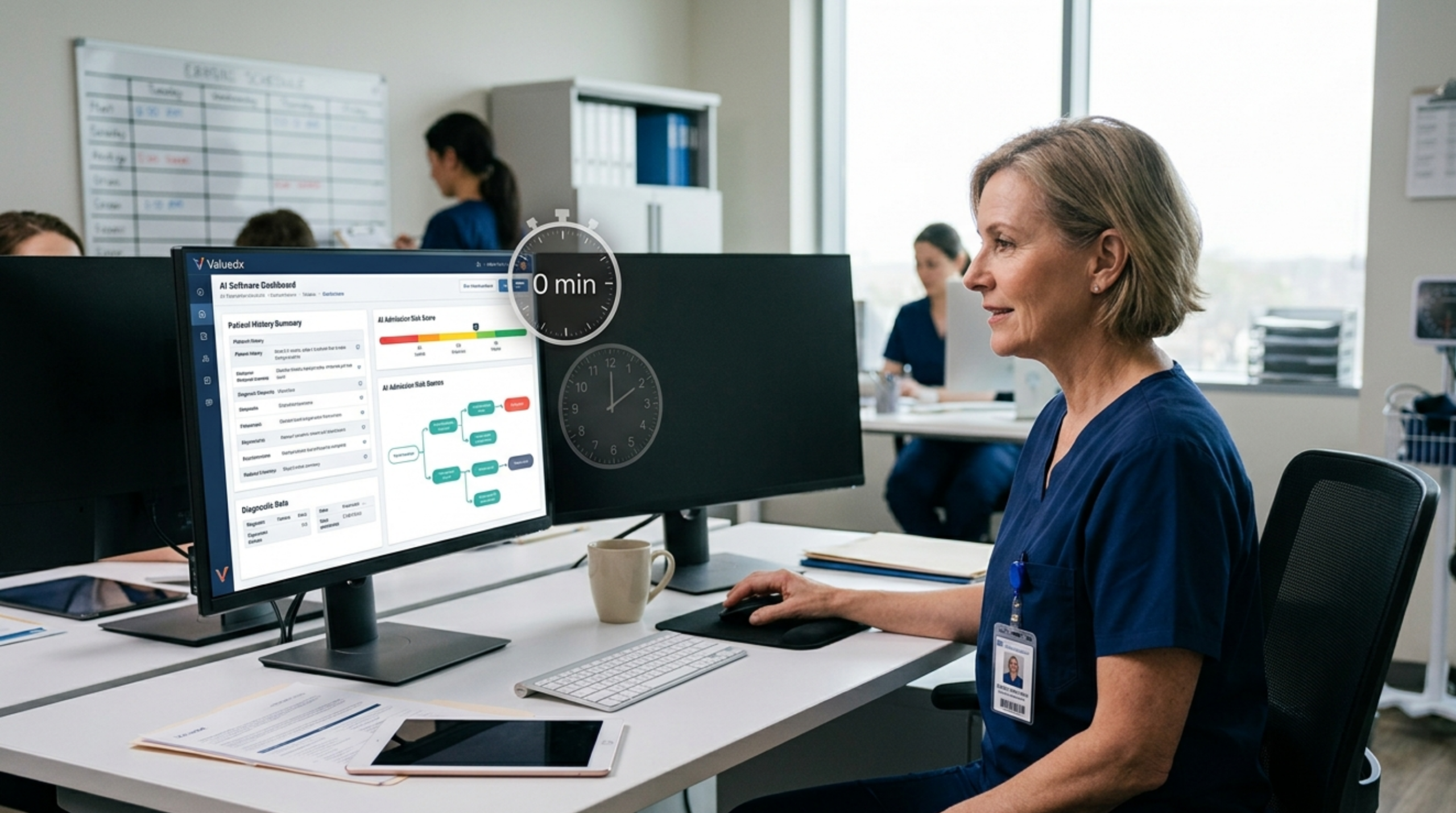
So what does this actually look like in practice? AI chart review for patient admission works by deploying natural language processing for medical records — meaning the software reads and interprets clinical text the same way a trained human would, just significantly faster. When a referral packet arrives, the tool ingests the documents, extracts key clinical indicators (primary diagnosis, comorbidities, functional status, wound care needs, IV medication requirements), and cross-references them against your facility's admission criteria and payer guidelines.
What used to take your coordinator two hours now surfaces as a structured clinical summary in minutes. Machine learning in healthcare means the system improves over time, learning from your facility's accept/decline patterns to sharpen its assessments. This is clinical document review AI functioning as a real-time decision support layer — not replacing your clinical judgment, but eliminating the low-value manual work that precedes it. Predictive analytics in post-acute care can even flag patients at high risk for readmission or extended stay, giving your team a fuller picture before the admission decision is made.
Measurable Outcomes Your Team Can Expect
The benefits of AI in post-acute admissions show up quickly and across multiple areas of your operation. Teams using post-acute care admissions software with AI capabilities consistently report faster referral response times — in some cases cutting review time by more than half. That speed directly correlates with higher referral conversion rates and stronger hospital relationships.
Beyond census impact, AI for SNF referral management reduces the administrative burden on your admissions staff significantly. Hours freed from paperwork translate into more time for relationship-building, family communication, and clinical coordination. Real-time patient eligibility assessment also strengthens your compliance posture — because when payer criteria are checked systematically on every referral, coverage denials tied to admission errors drop.
Healthcare AI decision support tools give your team confidence that nothing critical was missed, even at high referral volumes. The result is a more sustainable workload, a more selective census, and a team that is not burning out by Wednesday. Clinical AI tools for care coordination create a foundation where every admission decision is both faster and better-informed.
Ready to See What Faster, Smarter Admissions Looks Like?
If your team is still manually reviewing every chart from scratch, there is a better way — and it is already working for facilities like yours. Schedule a no-obligation demo to see how AI-powered admissions support can reduce admissions processing time, protect your census, and give your coordinators their afternoons back. You do not have to overhaul your entire workflow to start. One step in the right direction is enough to see the difference.