
Moving From Automation Experiments to Scalable Execution

Many healthcare platforms invest in Intelligent Automation but struggle to move beyond pilots. Without a structured framework, automation initiatives stall, create risk, or fail to deliver measurable value.

Download Free Guide


    Why Intelligent Automation Fails Without a Framework
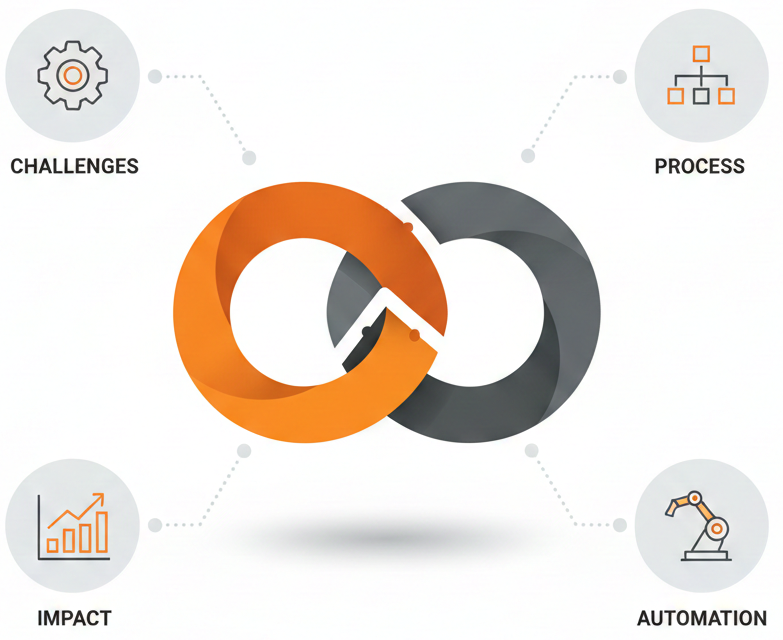
    intelligent automation in healthcare
    • Automation often fails when healthcare platforms focus on tools instead of workflows.

    • Unclear ownership, poor use-case selection, and weak governance prevent automation from scaling.
    • A structured framework is essential to ensure automation aligns with real operational needs, compliance requirements, and long-term objectives.

    Why This Topic Matters Now

    Healthcare leaders face rising administrative burden, staffing shortages, and operational complexity.

    A practical implementation framework helps organizations:

    • Reduce manual workload responsibly
    • Maintain compliance and control
    • Scale automation with confidence

    Automation is no longer optional but poorly executed automation creates more problems than it solves.

    Why This Topic Matters Now

    What’s Inside the Gated Executive Brief

    This executive resource outlines:

    A step-by-step framework for healthcare automation implementation
    A step-by-step framework for healthcare automation implementation
    A step-by-step framework for healthcare automation implementation
    The operating model, governance, and metrics required for scale

    Who Should Read This Gated Content

    Designed for leaders accountable for operational performance and risk:

    What a Practical Automation Framework Enables

    Without a Framework

    • Isolated automation pilots
    • Inconsistent execution
    • Compliance and audit risk
    • Limited ROI visibility

    With a Practical Framework

    • Standardized automation execution
    • Clear governance and ownership
    • Measurable operational outcomes
    • Scalable, enterprise-wide automation

    FAQs

    It is a structured approach that defines how automation is planned, governed, executed, and measured across healthcare operations—ensuring scalability, compliance, and real outcomes.

    Most failures occur due to poor workflow understanding, lack of governance, unclear ownership, and an over-focus on tools rather than operational execution.

    Use cases should be prioritized based on volume, repeatability, compliance risk, and measurable impact—not based on ease of automation alone.
    Strong governance includes access controls, auditability, human-in-the-loop oversight, exception handling, and alignment with regulatory requirements.
    By standardizing execution, defining an operating model, measuring outcomes, and incrementally scaling automation across validated workflows.
    Success should be measured through reduced manual effort, improved turnaround times, error reduction, operational stability, and value realization—not automation volume.

    Build Automation That Scales Not Experiments That Stall