
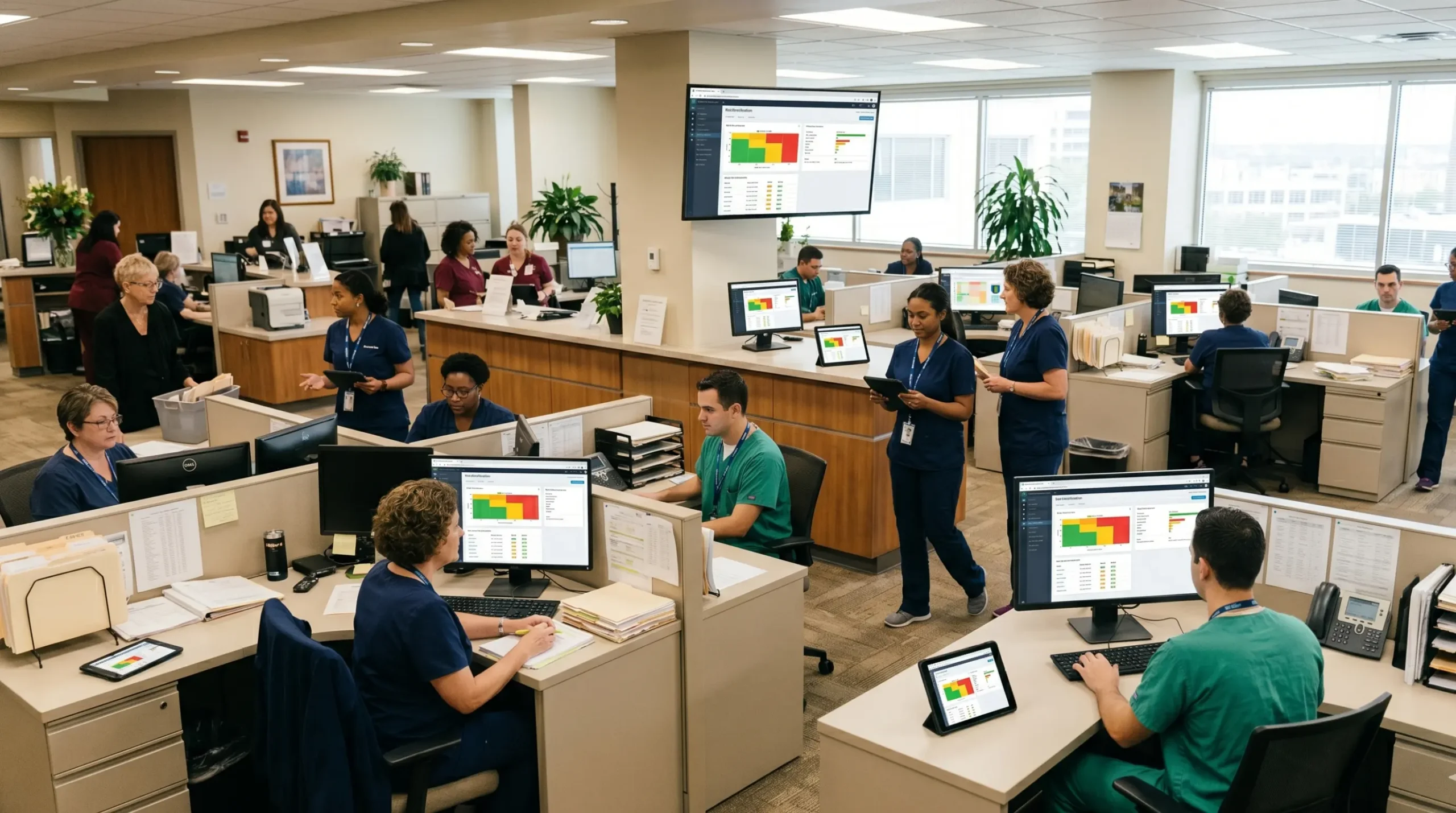
Strategic Report · Care Coordination
Why Case Managers Are Moving to Automated Patient Risk Stratification at Intake
Healthcare organizations across the United States are facing increasing pressure to improve patient outcomes while managing rising costs, staffing shortages, and complex regulatory requirements. For case managers, one of the biggest challenges is identifying high-risk patients early enough to intervene effectively.
Traditionally, this process relied heavily on manual chart reviews, clinical judgment, and fragmented data sources. However, a growing number of hospitals, health systems, and post-acute care providers are now adopting automated patient risk stratification at intake.
By leveraging data analytics, artificial intelligence (AI), and workflow automation, healthcare organizations can identify patients who are most likely to experience adverse outcomes, readmissions, or care gaps from the moment they enter the care continuum. This shift is transforming how case managers prioritize patients and allocate resources.
The Challenge of Manual Risk Assessment
At intake, case managers are often responsible for reviewing a large volume of patient information, including medical history, diagnoses, medications, social determinants of health, prior admissions, and insurance data. In many organizations, this process remains largely manual.
The problem is that manual assessments are time-consuming and inconsistent. Different case managers may interpret patient risk differently, leading to variations in care planning and resource allocation. Additionally, high patient volumes can make it difficult to thoroughly evaluate every individual entering the system.
What Is Automated Patient Risk Stratification?
Automated patient risk stratification uses technology to analyze clinical, financial, operational, and social data during the intake process. Advanced algorithms evaluate multiple risk factors simultaneously and assign an objective risk score or category to each patient.
These specialized tools instantly evaluate critical parameters such as:
- Overall chronic disease burden maps
- Historical hospitalizations and emergency department utilization
- Medication count complexity and interaction risks
- Co-occurring behavioral health conditions
- Social determinants of health (SDOH) profiles
- Functional and cognitive tracking limitations
- Palliative care eligibility baseline indicators
- Payer tracking and reimbursement risk flags
The result is a prioritized list of patients who require immediate attention, structured care coordination, or specialized interventions. Rather than spending hours digging through records, case managers receive actionable clinical insights within minutes.
Why Case Managers Are Embracing Automation
The transition away from legacy ad-hoc sorting patterns delivers five core architectural advantages to care management divisions:
1. Earlier Identification of High-Risk Patients
Timing is critical in healthcare. Delays in identifying high-risk patients can result in missed intervention opportunities, increased hospital utilization, and poorer outcomes. Automated risk stratification enables case managers to identify vulnerable patients at the point of intake, allowing care teams to initiate discharge planning, specialist referrals, or social support services much earlier.
2. Improved Consistency and Accuracy
Manual assessments are subject to human variability. Two experienced case managers may arrive at different conclusions when reviewing the same patient chart. Automated systems apply standardized criteria across all charts, reducing inconsistencies and helping health systems establish an objective risk assessment blueprint across multiple facilities.
3. Reduced Administrative Burden
Case managers spend a significant portion of their day gathering information, reviewing records, and documenting assessments. Automation drastically reduces time metrics by consolidating data from EHRs, claims systems, and referral platforms automatically—allowing specialists to focus on direct patient engagement and clinical decision-making.
4. Better Resource Allocation
Healthcare resources are finite. Care management teams cannot provide intensive support to every patient entering the system. Automated risk stratification helps organizations pinpoint which patients require the highest level of attention. High-risk individuals can be assigned to specialized case managers, while lower-risk patients seamlessly follow standard care pathways.
5. Stronger Performance in Value-Based Care Models
As reimbursement models continue to evolve, healthcare organizations are increasingly accountable for patient outcomes, readmission rates, and total cost of care. Risk stratification supports value-based care by identifying patients who are most likely to benefit from proactive interventions, reducing avoidable utilization while improving quality metrics.
The Growing Role of AI in Intake Workflows
Modern risk stratification solutions are becoming more sophisticated through the use of artificial intelligence and predictive analytics. Rather than relying solely on historical information, AI-powered models can identify hidden data patterns and predict future risks. For example, the system may recognize combinations of subtle medical, behavioral, and social factors that increase the likelihood of readmission even when no single factor appears critical on its own.
These predictive capabilities help case managers move from reactive care management to proactive intervention strategies.
Key Considerations for Healthcare Organizations
While the benefits are substantial, successful implementation requires more than simply deploying new technology. Healthcare organizations should focus on several foundational success pillars:
- System Integration: Tightly embed the analytics tool with existing electronic health record configurations.
- Algorithmic Transparency: Ensure complete clarity and visibility in how risk scoring methodologies are computed.
- Data Quality Governance: Keep prior utilization and screening records structured and standardized.
- User-Friendly Interface: Design clear, intuitive, and prioritized work queue layouts for case managers.
- Model Validation: Schedule ongoing performance monitoring to continuously re-calibrate risk tiers over time.
- Regulatory Compliance: Maintain full alignment with HIPAA and institutional data privacy rules.
Conclusion
The shift toward automated patient risk stratification at intake reflects a broader transformation occurring across US healthcare. As patient complexity increases and value-based care models continue to expand, case managers need tools that help them identify high-risk individuals quickly and accurately.
By automating risk assessment, healthcare organizations can improve consistency, reduce administrative workload, optimize resource allocation, and enable earlier interventions. Most importantly, they can ensure that patients who need the most support receive the right level of care at the right time. For case managers, automated risk stratification is no longer simply a technology upgrade—it is becoming an essential component of modern, patient-centered care delivery.