

In the UAE’s fast-growing business landscape, supplier management is increasingly recognized as a strategic lever for operational efficiency, cost optimization, and strong vendor partnerships. Yet, many organizations still rely on manual invoice approvals, fragmented communication, and spreadsheet-based workflows—practices that are prone to errors, delays, and compliance risks, especially in multi-currency and multi-entity environments common across the GCC.
Current Challenges in UAE Supplier Management
Finance teams in UAE-based companies face several obstacles in managing suppliers effectively:
- Manual and Fragmented Processes: Paper-based approvals, emails, and disconnected systems create delays and increase error rates.
- Multi-Currency Complexity: Businesses dealing with suppliers in the UAE, GCC, and beyond must manage payments in multiple currencies while navigating fluctuating exchange rates.
- Compliance Requirements: Adherence to VAT regulations, UAE Commercial Companies Law, and regional reporting standards adds layers of complexity.
- Limited Visibility: Without real-time dashboards, finance teams struggle to track pending approvals, outstanding invoices, and supplier performance.
- Weak Supplier Engagement: Delayed communication and slow payment cycles can strain relationships with critical local and regional suppliers.
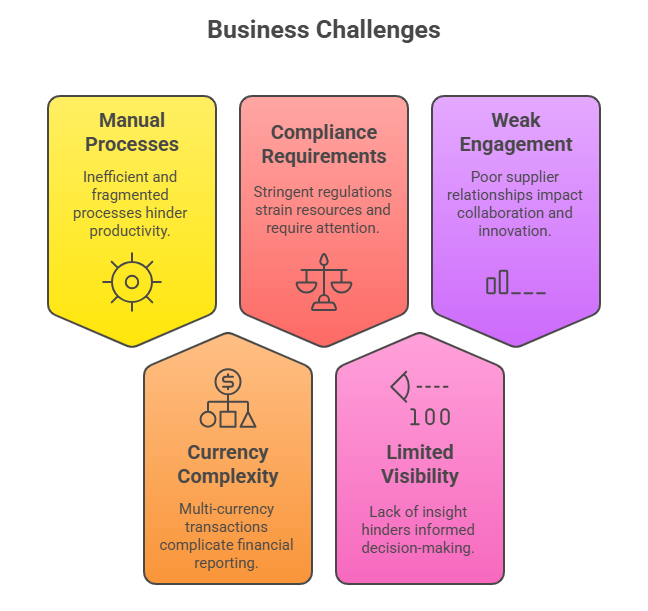
These challenges in supplier management impact operational efficiency, increase costs, and reduce agility in strategic decision-making.
Implications for UAE Businesses
Ineffective supplier management can ripple across the organization: delayed approvals and payments may disrupt supply chains, while errors in compliance can result in penalties and regulatory scrutiny. Furthermore, weak supplier engagement limits collaboration opportunities and reduces bargaining leverage in competitive markets such as logistics, construction, and trading across the UAE and GCC.
P2P Automation: Transforming Supplier Management
Supplier management solutions P2P are increasingly helping UAE finance teams overcome these challenges. By automating supplier relationships and digitizing invoice and payment workflows, organizations can enhance visibility, accelerate processing, and strengthen compliance.
Key Procure-to-Pay Automation Benefits Include:
- Enhanced Compliance: Automated workflows reduce VAT and regulatory errors, ensuring adherence to UAE and GCC regulations.
- Faster Invoice Approvals and Payments: Streamlined multi-currency payment processing accelerates cash flow and strengthens supplier trust.
- Reduced Manual Errors: Automation eliminates duplicate payments, misentries, and reconciliation discrepancies.
- Stronger Supplier Engagement: Real-time dashboards and notifications improve communication and transparency with suppliers.
For example, a Dubai-based trading company integrated a cloud-based P2P platform with its ERP system to manage invoices from local and regional suppliers. The result was a 35% reduction in processing time, faster multi-currency payments, and improved supplier satisfaction.
Future Trends and Innovative Strategies
The future of procurement technology in the UAE is shaped by AI, analytics, and integrated cloud-based solutions. P2P automation future trends include:
- AI-Powered Predictive Insights: Forecast supplier risks, optimize spend, and identify opportunities for strategic sourcing.
- Integrated Supply Chain Solutions: P2P automation for supply chain ensures seamless coordination between suppliers, finance teams, and ERP systems across multiple regions.
- Digital Supplier Portals: Suppliers can submit invoices, track payments, and communicate in real time, enhancing collaboration and transparency.
- Innovative Supplier Management Strategies: Automated scorecards, dynamic discounting, and KPI tracking improve supplier performance and engagement.
By following p2p automation best practices, such as standardizing workflows, implementing supplier self-service portals, and continuous monitoring of supplier KPIs, UAE finance teams can maximize efficiency and mitigate risk.
Practical Takeaways for UAE CFOs and Finance Teams
- Assess Current Processes: Identify bottlenecks in approvals, payments, and supplier communications.
- Implement Supplier Management Solutions P2P: Opt for platforms that integrate with existing ERP and accounting systems.
- Leverage Procure-to-Pay Automation Benefits: Focus on areas where automation reduces errors, accelerates processing, and enhances compliance.
- Monitor Supplier Performance: Use dashboards and analytics to continuously optimize supplier engagement and procurement strategies.
Transforming procurement with automation empowers UAE organizations to improve efficiency, ensure compliance, and strengthen supplier relationships across the UAE and GCC markets.
Conclusion
For UAE finance and procurement leaders, P2P automation is more than a technological upgrade—it is a strategic imperative. By automating supplier relationships, optimizing multi-currency payments, and adopting innovative management strategies, organizations can streamline procurement, reduce risks, and enhance supplier collaboration.
Read our next blog – Click here