
In India’s fast-evolving business environment, CFOs, procurement heads, and finance leaders are under constant pressure to achieve more with less—streamlining operations, ensuring compliance, and unlocking working capital. At the heart of this pressure lies the Procure-to-Pay (P2P) process, a critical financial workflow that directly influences cost control, vendor relationships, and cash flow.
The shift towards P2P automation is no longer just a technological upgrade—it is a strategic necessity. But the question every leader asks is: What is the tangible ROI of P2P automation, and how can it be calculated in the Indian business context?
The Indian P2P Landscape: Challenges That Erode Value
For Indian enterprises, the procurement and accounts payable (AP) processes are riddled with complexities:
- High Transaction Volumes
Enterprises—particularly in sectors like manufacturing, retail, pharma, and IT services—process thousands of invoices monthly. Manually handling them not only slows down operations but also inflates cost per invoice. - Regulatory Complexity
With GST compliance, e-invoicing mandates, TDS deductions, and e-way bill regulations, finance teams face constant scrutiny. Manual errors here can lead to penalties and reputational risks. - Supplier Diversity
Organizations work with a wide network of vendors, from MSMEs to global suppliers. Poor visibility into supplier invoices, delayed payments, and disputes affect supplier trust and negotiation leverage. - Manual Inefficiencies
Paper-based invoices, email approvals, and Excel-driven reconciliations still dominate in many Indian firms. This results in:- Processing delays
- Higher risk of duplicate or fraudulent invoices
- Lack of transparency in spend analytics
- Pressure to Digitize
The Digital India initiative and increasing competition are pushing enterprises to modernize procurement and finance. However, the ROI on automation investments must be crystal clear to secure boardroom buy-in.
Identifying the Need: Why CFOs Are Demanding Change
The pain points above translate into real financial challenges:
- Delayed invoice approvals slow down payments, leading to missed early-payment discounts.
- Inefficient processes increase the average cost to process an invoice (₹400–₹700 per invoice in manual systems vs. ₹100–₹200 in automated ones).
- Compliance risks mean potential penalties and disruptions in tax audits.
- Limited visibility into working capital hampers cash flow planning.
In short, manual P2P processes are not just operational bottlenecks—they are strategic risks.
How P2P Automation Delivers ROI
P2P automation platforms—powered by AI, RPA, and analytics—transform procurement and Accounts Payable automation workflows into a seamless, error-free, and value-driven process. Here’s how:
- Efficiency and Cost Savings
- Automated invoice capture (OCR + AI) reduces manual data entry.
- Straight-through processing ensures faster matching of PO, GRN, and invoice.
- Labor costs are reduced as finance teams spend less time on repetitive tasks.
Impact in India:
Enterprises processing 50,000 invoices annually can save ₹40 Lakhs per year by reducing manual costs and cycle times.
- Reduced Errors and Compliance Risks
- Automatic GST validation, TDS deductions, and e-invoicing compliance reduce the risk of errors.
- Audit trails and digital records ensure readiness for government inspections.
Impact in India:
With GST penalties running as high as ₹25,000 per incorrect filing, automation minimizes risk exposure.
- Faster Invoice Processing & Working Capital Optimization
- Cycle time drops from 15–20 days (manual) to 2–3 days (automated).
- Organizations can capitalize on early payment discounts (1–2%) and improve DPO (Days Payable Outstanding) strategy.
Impact in India:
For a company with ₹500 crore annual spend, capturing just 1% in discounts = ₹5 crore savings annually.
- Supplier Collaboration and Relationship Management
- Supplier portals provide real-time invoice tracking, reducing disputes.
- Faster payments build trust, especially with MSMEs who depend on timely cash flow.
Impact in India:
Improved vendor relationships lead to better negotiation power and preferential pricing—critical in a competitive procurement environment.
- Data-Driven Decision Making
- Advanced analytics deliver real-time insights into spend, compliance, and supplier performance.
- CFOs gain visibility to forecast working capital and negotiate better contracts.
Quantifying ROI: A Practical Framework for Indian Enterprises
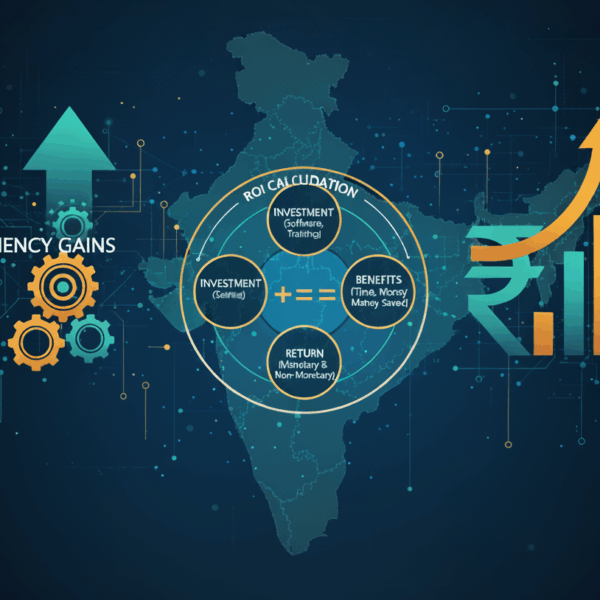
CFOs often look at ROI in terms of direct cost savings, indirect benefits, and long-term strategic value. A structured approach includes:
- Direct Savings
- Reduced cost per invoice
- Early payment discounts captured
- Lower penalties and compliance costs
- Indirect Benefits
- Productivity gains (employees redirected to strategic finance tasks)
- Improved supplier relationships
- Better audit readiness
- Strategic Value
- Enhanced cash flow forecasting
- Scalability without proportional cost increase
- Stronger resilience to regulatory and market shifts
Case Example (Indian Enterprise):
A mid-sized FMCG company processing 60,000 invoices annually reduced cost per invoice from ₹550 to ₹150 through automation. Combined with compliance savings and early payment discounts, the company realized an ROI of 4x within 18 months.
Long-Term Value: Beyond Cost Savings
P2P automation is not just about cutting costs—it’s about building future-ready enterprises:
- Scalability: Handle growing invoice volumes without hiring more staff.
- Governance: Ensure transparent, auditable processes aligned with Indian compliance.
- Resilience: Stay agile in a volatile economy with real-time financial insights.
- Digital Transformation: P2P automation often becomes the stepping stone to broader finance and procurement digitization.
Final Word: Why the ROI Conversation Matters Now
For Indian enterprises, the ROI of P2P automation is not theoretical—it is measurable, impactful, and immediate. Reduced costs, improved compliance, better supplier relations, and enhanced cash flow collectively ensure that automation investments deliver multi-fold returns.
As Indian CFOs and finance leaders look ahead, P2P automation is not just a cost-saving tool—it is a strategic lever for growth, resilience, and competitiveness in the digital-first economy.