

The UAE has positioned itself as a global hub for business and innovation. With strong government initiatives around digital transformation, e-invoicing adoption, and paperless ecosystems, finance leaders are under growing pressure to modernize their back-office operations. Despite this progress, many organizations still rely on manual or semi-digital invoice processing—using spreadsheets, email-based approvals, and paper invoices.
For accounts payable (AP) teams, this creates time-consuming processes. An invoice may pass through multiple hands before approval, causing delays in payment cycles, poor vendor relationships, and higher operational costs. In a region where business speed is critical, these inefficiencies can no longer be ignored.
The Challenges of Manual Invoice Processing
Manual AP processes create significant hurdles for UAE companies, especially as organizations scale:
- Slow Processing Times: Paper and email-based workflows often require manual data entry, approval chasing, and reconciliation, extending the invoice cycle to weeks.
- High Error Rates: Human entry mistakes, duplicate invoices, and missed payments lead to compliance risks and financial inaccuracies.
- Compliance and VAT Challenges: The UAE’s VAT regulations and growing e-invoicing requirements demand accurate, timely records—manual processes make compliance risky.
- Limited Visibility: Finance teams struggle with real-time visibility into cash flow and outstanding liabilities, affecting decision-making.
- Increased Operational Costs: More staff are needed to handle routine tasks, inflating the cost per invoice processed.
These bottlenecks impact working capital optimization, vendor trust, and the agility of the finance function.
The Solution: Invoice Automation in Action
Forward-looking UAE companies are turning to invoice automation to overcome these challenges. Invoice automation solutions use AI-driven data capture, digital workflows, and ERP integrations to transform AP from a manual, reactive function into a streamlined, proactive one.
Key Features of Invoice Automation:
- AI-Powered Data Capture: Extracts invoice data automatically, eliminating manual entry errors.
- Digital Approval Workflows: Invoices are routed electronically to the right stakeholders, cutting approval times.
- Smart Validation & Compliance Checks: Ensures invoices comply with VAT and internal policies before posting.
- ERP Integration: Syncs seamlessly with accounting systems for faster reconciliation and reporting.
Analytics Dashboards: Provides finance leaders with real-time visibility into payables and cash flow.
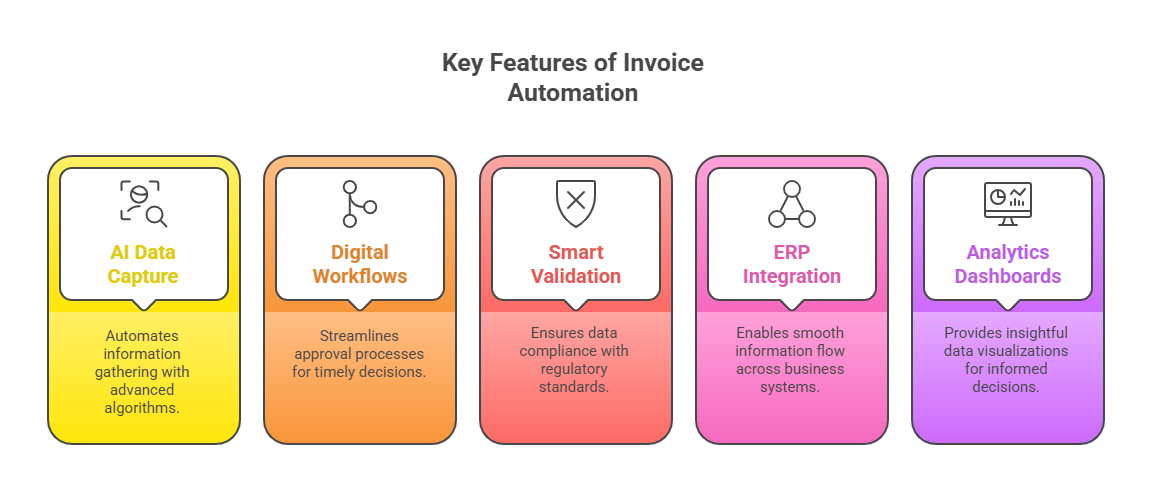
By automating repetitive tasks, UAE organizations are freeing up finance teams to focus on strategic initiatives like vendor negotiations, cash management, and compliance optimization.
The Outcomes: 80% Faster Invoice Processing
UAE companies implementing invoice automation have reported measurable improvements:
- 80% Faster Processing: Automated workflows reduce invoice cycle times from weeks to days—or even hours.
- Cost Savings of 40–60%: Lower manual effort and reduced errors directly cut invoice processing costs.
- Improved Accuracy & Compliance: Automated VAT checks and audit-ready records reduce compliance risks.
- Better Vendor Relationships: Faster payments and reduced disputes enhance supplier trust.
- Scalable Finance Operations: Automation enables companies to handle higher invoice volumes without adding headcount.
Real-World Example
A large UAE-based retail company, processing over 30,000 invoices annually, faced long delays due to manual verification and multi-level approvals. After adopting invoice automation integrated with their ERP:
- Invoice approvals dropped from 14 days to under 3 days.
- Exceptions reduced by 70%, thanks to automated data validation.
- The AP team redirected 40% of its effort to strategic financial planning instead of routine tasks.
This transformation not only reduced costs but also gave the finance leadership real-time visibility into liabilities—critical for cash flow forecasting and decision-making.
Key Takeaways for UAE Companies
- Start with a Process Audit: Map current AP workflows to identify bottlenecks and compliance risks.
- Adopt Scalable Automation: Choose solutions that integrate seamlessly with your ERP and support VAT/e-invoicing compliance.
- Focus on Change Management: Train staff and align stakeholders to maximize adoption.
- Leverage Analytics: Use insights from automation platforms to strengthen vendor relationships and improve cash flow.
- Think Beyond Cost Savings: Automation is not just about speed—it builds agility, compliance confidence, and scalability.
Conclusion
In the UAE, where businesses compete on speed, agility, and trust, manual invoice processing is no longer sustainable. Invoice automation empowers organizations to achieve 80% faster invoice processing, reduce operational costs, and ensure compliance with local regulations.
By learning from real-world implementations, UAE companies can confidently modernize their accounts payable function—unlocking efficiency, productivity, and financial visibility that supports long-term growth.