
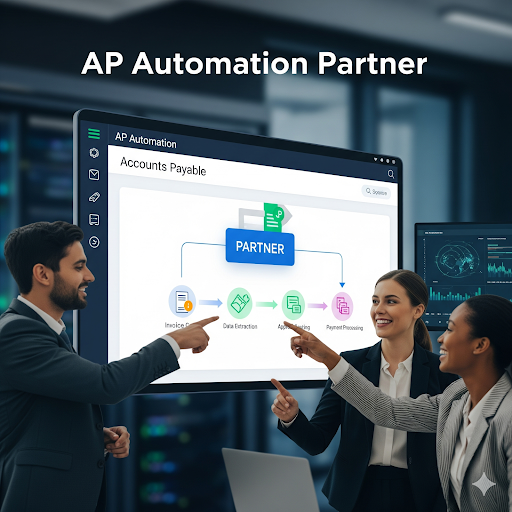
I’ll be honest—most finance events I attend feel the same. PowerPoints, jargon, coffee breaks. But last week in Mumbai, something different happened. A manufacturing company hosted a closed-door panel with CFOs and finance heads. No vendors, no pitches. Just raw conversations about one burning question:
“How do you actually choose the right Accounts Payable automation partner?”
I was sitting in the back, pen ready. And let me tell you—the honesty in that room was refreshing.
“If they don’t get Indian compliance, don’t even start.”
That line came from a Pune-based CFO who has spent two years untangling GST mismatches. Everyone in the room nodded like they’d been through the same nightmare.
Accounts Payable in India isn’t just about moving invoices from email to ERP. It’s GST checks, TDS deductions, e-invoicing rules that change mid-year. One finance head said, “Our last system couldn’t adapt fast enough, and we ended up correcting lakhs worth of invoices manually. Never again.”
The consensus? A partner who understands Indian compliance first. If they treat it like an afterthought, you’ll be the one paying the price—sometimes literally crores in penalties.
Templates are dead. Flexibility is king.
Here’s the thing—Indian invoices are chaos. Some are neat PDFs, some are scanned on low-res apps, some are half handwritten in Marathi.
One controller joked, “If I had a rupee for every tilted invoice PDF, I’d be rich by now.” Everyone laughed because it was too real.
This is where template-driven tools fall flat. Nobody has time to “set up a template” for every vendor. The group agreed—the future is template-free invoice capture. A Bangalore CFO explained how her current partner reads invoices in English, Hindi, even Marathi without hiccups. That flexibility saved her team hours each week.
Vendors aren’t going to change—your system has to.
One FMCG finance head from Delhi shared his mistake:
“We forced all vendors to log into a portal. Guess what? They didn’t. We were back to chasing them on WhatsApp in two weeks.”
The room burst out laughing, but the point was serious. Vendors will use what’s easiest—email, WhatsApp, portal if they like. A real Accounts Payable partner doesn’t force them, it supports all channels.
Think about it—if your partner doesn’t make life easier for vendors, adoption fails. Period.
Real-time visibility = real power
Another hot topic was visibility. A finance manager said, “I don’t want to find out at month-end that we have ₹80 lakh worth of unrecorded liabilities. I want to see it today.”
Traditional AP setups make you wait for reconciliation. By then, cash flow is already hit. But the companies using AI-powered AP said they see liabilities in real time.
One Pune-based firm discovered ₹1.2 crore in pending vendor bills just days after going live with automation. That single insight reshaped their entire cash planning.
Pricing: “If you’re so confident, prove it.”
This was my favorite part of the debate. A Delhi CFO raised her hand and asked: “Why should I pay upfront if you’re so sure your solution works?”
Silence in the room for a few seconds, then nods. Everyone knew the answer: outcome-based pricing.
One participant shared how their automation partner set up the system in 10 days flat—zero downtime—and billed them only for invoices actually processed. “That’s when I knew they had skin in the game,” he said.
The message was clear: partners who demand heavy upfront fees are passing risk back to you. The real partners share the risk.
Manual vs. Automated – Straight from the room
| Factor | Manual AP | AI-Powered AP |
|---|---|---|
| Invoice Handling | Templates, manual mapping | Template-free, multi-language |
| Compliance | GST/TDS errors common | Automated validation + e-invoicing ready |
| Vendor Experience | Emails + phone calls | Multi-channel: email, WhatsApp, portal |
| Processing Time | 5-7 days | Same Day |
| Visiblity | Month-end only | Real-time dashboards |
| Cost | High manual effort | Outcome-based, no upfront fees |

The underrated factor: cultural fit
A Bangalore finance head added a final gem: “When GST misfires at 10 pm, I don’t want a ticket number. I want a human voice who understands what’s at stake.”
That line stuck with me. Because choosing an Accounts Payable partner isn’t just about features—it’s about trust. You’re handing over something mission-critical. If your partner doesn’t understand Indian business culture, regional invoice quirks, or compliance panic, the relationship won’t last.
My takeaway
By the end of the night, three truths were obvious:
- Compliance-first is non-negotiable.
- Flexibility beats rigid systems.
- Outcome-based pricing shows true confidence.
And honestly—that’s why companies are turning to ValueDX. With AI-driven, template-free invoice capture, GST/TDS/e-invoicing built in, multi-channel vendor access, and outcome-based pricing, we’re not just another AP tool. We’re a partner who takes 80% of the workload off your plate and delivers results in days, not months.
So next time you’re evaluating AP automation, ask yourself the same questions those CFOs asked in Mumbai. Don’t buy flashy software. Choose a partner who gets compliance, supports your vendors, and stands by results.
Read our next blog – Click here