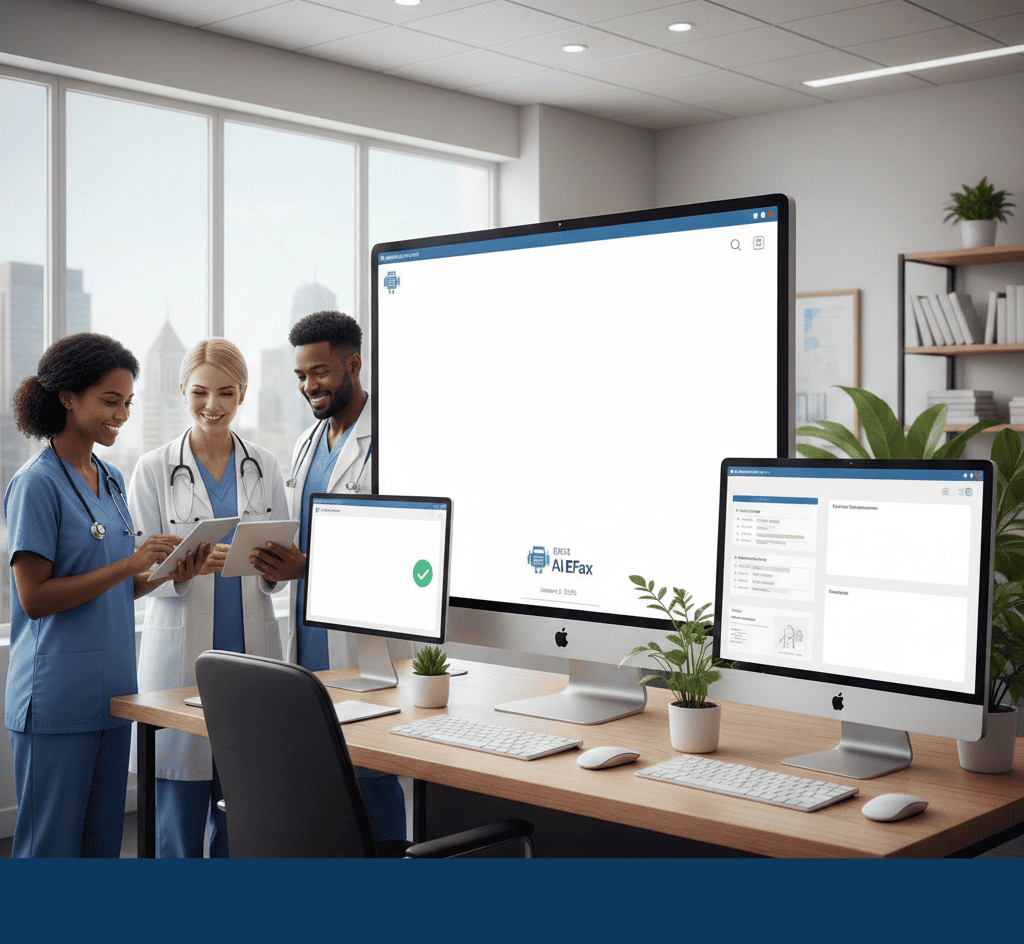
Despite rapid digital transformation across healthcare, Skilled Nursing Facilities (SNFs) still depend heavily on fax-based communication to exchange critical patient and financial information. Referrals, physician orders, lab reports, authorizations, and billing documents continue to arrive via fax creating administrative overload and increasing exposure to HIPAA compliance risks.
Manual fax handling is no longer sustainable. AI-powered eFax automation combined with intelligent document classification enables SNFs to convert this legacy process into a secure, compliant, and highly efficient digital workflow without disrupting existing systems.
The Reality of Manual Fax Processing in Skilled Nursing Facilities
In SNF operations, time directly impacts patient outcomes and revenue cycle performance. Yet traditional fax workflows require staff to manually receive documents, identify their type, sort them, forward them to the right department, upload them into the EHR, and track completion. This process is slow, repetitive, and vulnerable to error.
Key challenges include:
- Heightened HIPAA Exposure
Physical documents can be misplaced, misrouted, or accessed by unauthorized individuals, making regulatory compliance difficult to maintain. - Operational Delays
Manual fax handling slows down admissions, care coordination, and billing—leading to intake backlogs and delayed reimbursements. - Staff Fatigue and Burnout
Constant document sorting and routing pulls skilled staff away from patient-focused responsibilities, increasing frustration and inefficiency.
To remain competitive and compliant, SNFs must move from paper-based workflows to smart, automated data processing.
How AI eFax Automation Transforms SNF Compliance and Efficiency
AI eFax automation replaces manual intervention with intelligent, rules-driven workflows. Incoming faxes are captured digitally and processed instantly using advanced AI technologies.
How does AI eFax automation support HIPAA compliance?
By removing paper from the process, AI-driven eFax systems dramatically reduce the risk of data loss or unauthorized access. Every document is encrypted, time-stamped, logged, and automatically routed only to approved systems or users. This creates a consistent audit trail and strengthens overall PHI security.
Can smart data help SNFs meet regulatory requirements?
Absolutely. AI-powered smart data conversion uses technologies like Optical Character Recognition (OCR) and Natural Language Processing (NLP) to extract information from fax images and convert it into structured, usable data. This ensures accurate documentation, timely processing, and better adherence to Medicare, Medicaid, and HIPAA regulations.
Intelligent Classification: The Engine Behind eFax Workflow Automation
Intelligent classification is what makes AI eFax automation truly powerful. Using machine learning models trained on healthcare documents, the system automatically identifies what type of document has arrived such as a referral, physician order, lab report, or claim and determines the next action.
Instead of staff asking, “Where should this go?”, the system decides instantly, ensuring faster routing, fewer errors, and consistent handling across departments. This capability is a defining feature of the most effective AI eFax solutions for SNF compliance.
Real-World Use Cases: Where AI eFax Delivers Maximum Value in SNFs
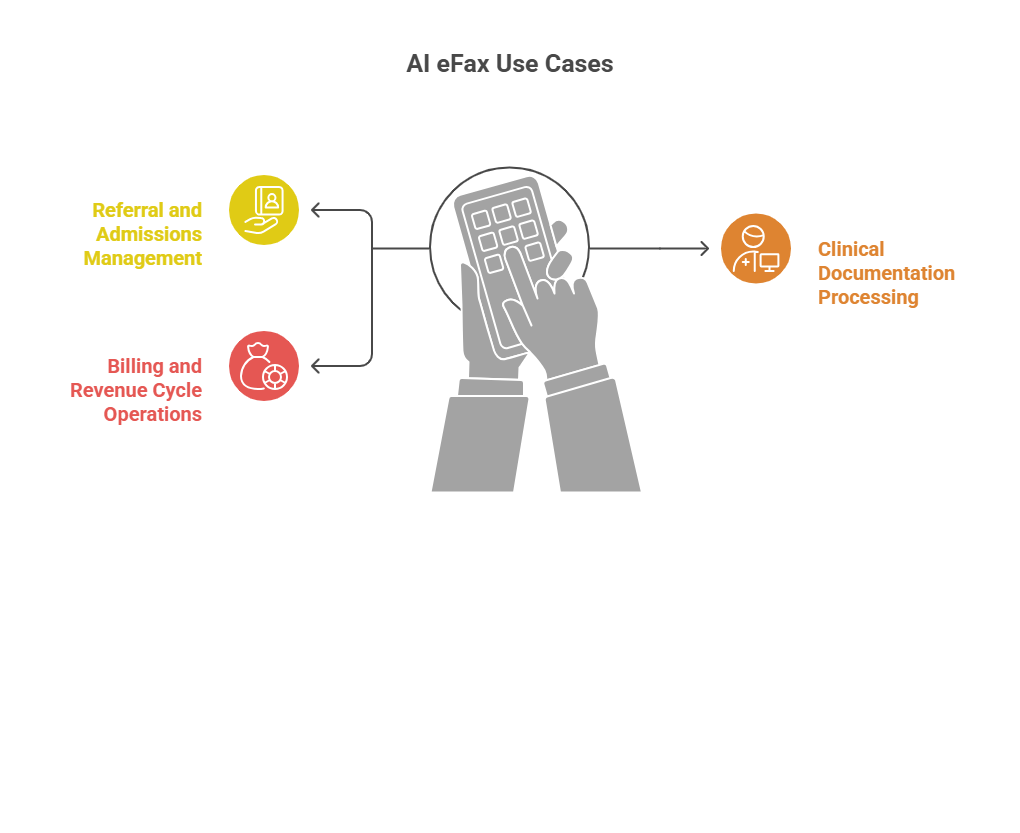
1. Referral and Admissions Management
Referral faxes are automatically classified, with patient demographics and payer details extracted in seconds. Documents are routed directly to the intake team, accelerating admissions and reducing missed opportunities.
2. Clinical Documentation Processing
Physician orders, lab results, and medical necessity forms are identified and uploaded to the correct patient record automatically, giving clinicians faster access to current information and supporting better care decisions.
3. Billing and Revenue Cycle Operations
Claims, authorizations, and financial documents are routed to finance teams without delay, improving billing accuracy and speeding up reimbursement cycles.
Manual vs. AI-Powered eFax Processing in SNFs
| Feature | Manual eFax Handling | AI-Driven eFax Automation |
|---|---|---|
| Document Identification | Staff manually reads and categorizes | AI instantly classifies documents using machine learning |
| Routing | Manual forwarding or physical delivery | Automated routing based on rules and document type |
| Processing Time | Minutes per document, hours per day | Seconds per document |
| Error risk | High likelihood of misfiling or delays | Significantly reduced through automation |
| Staff effort | Repetitive administrative work | Focus on patient care and decision-making |
Author – Pradeep Dhakne
Read our next blog – Click here