
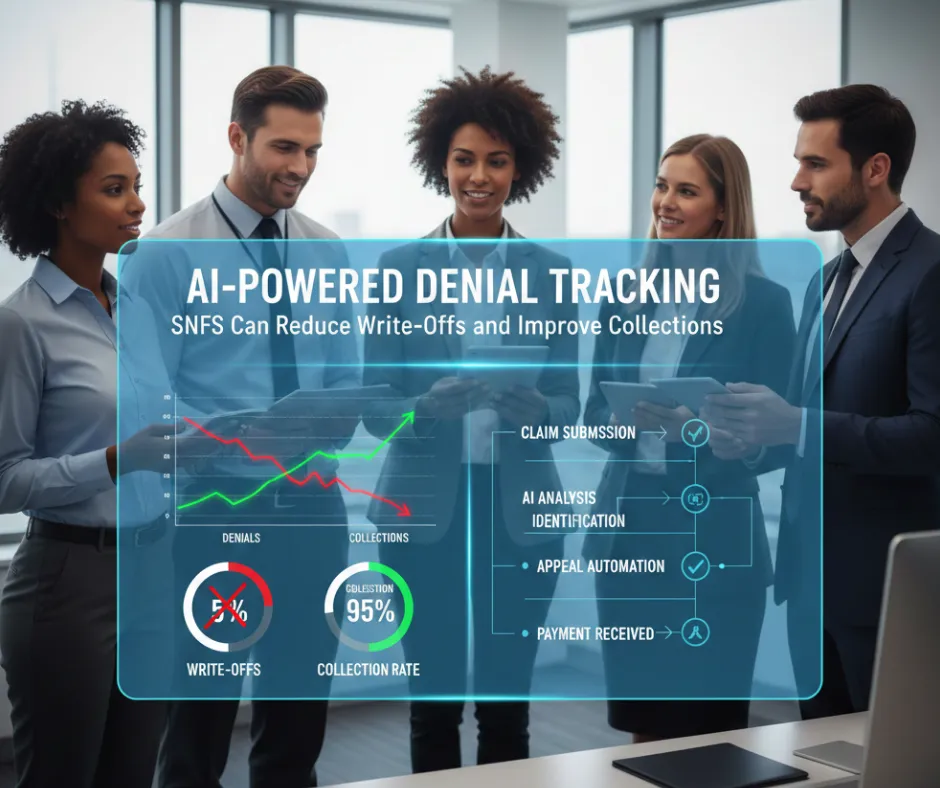
Denied claims are one of the leading causes of revenue leakage in Skilled Nursing Facilities (SNFs). Every denied claim represents delayed cash flow, increased administrative effort, and a higher likelihood of write-offs if issues are not resolved quickly. With rising operational costs and tighter Medicare and Medicaid scrutiny, SNFs can no longer afford inefficient denial tracking processes.
Many facilities still rely on spreadsheets, payer portals, and manual follow-ups to track denials and appeals. These fragmented approaches make it difficult to identify trends, prioritize high-impact denials, or recover revenue efficiently. Healthcare automation denial management, powered by Artificial Intelligence (AI), is transforming how SNFs track denials, reduce write-offs, and improve collections.
By implementing AI-powered denial tracking, SNFs gain real-time visibility into denial status, root causes, and recovery opportunities—enabling proactive intervention and sustainable revenue cycle performance.
The Role of AI-Powered Denial Tracking in SNFs
AI-powered denial tracking introduces intelligence, automation, and predictability into one of the most manual areas of the SNF revenue cycle. By combining Predictive Analytics for SNF denials, machine learning, and intelligent workflows, facilities can shift from reactive follow-ups to strategic SNF revenue cycle denial avoidance and recovery.
Centralized, Real-Time Denial Visibility
AI-driven platforms consolidate denial data from multiple payers into a single, centralized dashboard. Instead of manually checking payer portals, billing teams gain real-time insights into denial status, aging, and financial impact. This visibility allows SNFs to prioritize high-value denials and take action before timely filing limits expire.
By leveraging SNF denial reasons AI, facilities can immediately understand why claims were denied and which issues require urgent attention—significantly improving collection timelines.
Intelligent Denial Categorization and Prioritization
Not all denials carry the same financial risk. AI-powered denial tracking uses Machine Learning denial patterns SNFs to automatically categorize denials by root cause, payer, service type, and recovery probability. This enables teams to focus on denials most likely to be overturned, helping reduce SNF write-offs with AI.
Through AI root cause analysis denials, facilities can also identify recurring issues—such as authorization delays or therapy documentation gaps—and address them upstream.
Predictive Analytics to Prevent Repeat Denials
Denial tracking is not just about recovery—it is also about prevention. AI platforms use predictive AI denial SNF models to analyze historical denial outcomes and identify claims with a high likelihood of future denial.
This proactive approach supports prevent Medicare denials SNF and strengthens Medicaid claim denial prevention SNF by ensuring corrective actions are taken before similar claims are submitted again.
Automated Documentation and Evidence Matching
One of the biggest barriers to successful appeals is missing or incomplete documentation. AI-powered tools leverage OCR claim documentation SNFs and NLP denial data extraction SNF to automatically match denial reasons with the required clinical and billing documentation.
This automation accelerates appeal preparation, improves submission accuracy, and directly contributes to skilled nursing facility billing errors reduction—shortening the time between denial and payment.
Improved Compliance and Audit Readiness
AI-powered denial tracking also supports AI for SNF compliance by continuously monitoring payer rule adherence and documentation standards. Intelligent Automation SNF billing tools validate authorization timelines, coverage criteria, and coding accuracy, reducing compliance-related denials.
This structured, auditable approach improves payer confidence, strengthens internal controls, and enhances long-term collection performance.
Faster Collections and Reduced Revenue Leakage
By automating denial workflows and prioritizing high-impact recoveries, AI significantly reduces the time and effort required to resolve denied claims. Billing teams spend less time on manual tracking and more time on strategic revenue recovery.
The result is improved cash flow, higher appeal success rates, and the ability to improve operational efficiency SNF billing without increasing staffing costs.
Manual vs AI-Powered Denial Tracking in Skilled Nursing Facilities
| Aspect | Manual Denial Tracking | AI-Powered Denial Tracking |
|---|---|---|
| Denial visibility | Fragmented across systems | Centralized, real-time dashboards |
| Root cause identification | Manual investigation | Automated AI root cause analysis denials |
| Denial prioritization | One-size-fits-all | ML-based financial prioritization |
| Documentation matching | Manual and error-prone | OCR & NLP-driven automation |
| Appeal turnaround time | Slow and inconsistent | Faster, data-driven |
| Write-off reduction | Limited impact | Significant reduction with AI |
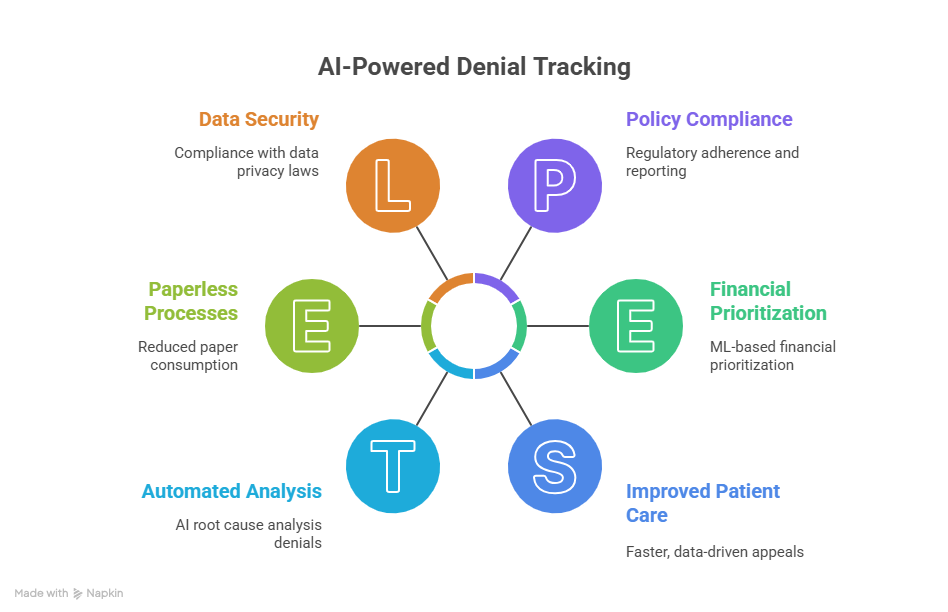
Smarter Denial Tracking for Stronger SNF Collections
AI-powered denial tracking is redefining how Skilled Nursing Facilities manage denied claims and recover lost revenue. By combining Generative AI denial workflows, predictive analytics, and intelligent automation, SNFs can move beyond reactive denial management toward proactive revenue protection.
Facilities that adopt AI-powered denial tracking gain better visibility, faster collections, fewer write-offs, and stronger compliance. As payer requirements grow more complex, AI-driven denial tracking is becoming essential for SNFs looking to stabilize cash flow and improve long-term financial performance.
Conclusion: Transforming Denial Tracking with AI
AI is redefining denial tracking and revenue recovery for SNFs. With Intelligent Automation revenue recovery, Generative AI root cause reporting, and predictive analytics, facilities can improve collections, reduce write-offs, and gain complete visibility into denial performance.
Ready to accelerate denial recovery and protect your revenue?
Explore AI-powered denial tracking solutions designed for Skilled Nursing Facilities. Request a demo to improve collections, reduce write-offs, and streamline denial resolution with AI-driven automation.
Read our next blog – Click here