The Hidden Truth Behind Manual Invoice Processing

Manual invoicing looks simple on the surface—but under it lies a cluster of invisible costs, process delays, and risks that quietly drain budget and efficiency. CFOs and finance leaders who rely on traditional AP workflows often overlook these hidden leakages until they impact cash flow, audit readiness, or vendor trust.

Download Free Guide


    The Challenge

    Why Do Hidden AP Costs Go Unnoticed for So Long?
    manual invoice processing costs

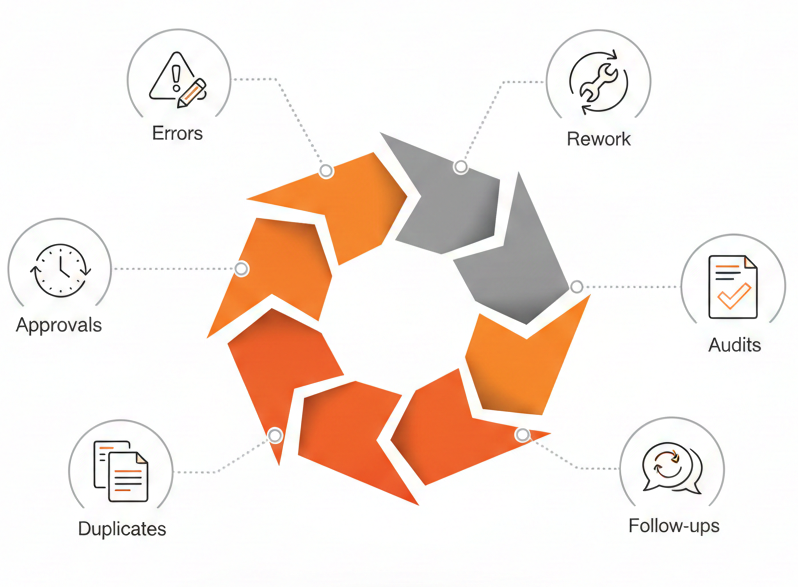
    Even high-performing finance teams fall into recurring patterns:

    • Manual data entry mistakes
    • Extra hours spent fixing invoice exceptions
    • Slow approvals due to email-based routing
    • Inconsistent documentation for audits
    • Duplicate invoices slipping through
    • Vendors repeatedly chasing status updates

    The Real Impact of These Hidden Costs

    What Do These Inefficiencies Actually Cost Finance Leaders?

    A Modern Lens for CFOs & AP Leaders

    What Does a Better, Leaner, High-Visibility AP Workflow Look Like?

    Modern AP optimization isn’t just about automation—it’s about clarity, predictability, and structure.

    A strong foundation includes:

    • Standardized invoice intake
    • Three-way matching compliance
    • Clear approval routing rules
    • PO-first purchasing culture
    • Real-time dashboards for liabilities & delays
    • Exception workflows that reduce shadow work

    Are You Ready to Reduce These Hidden Costs?

    What Should CFOs Evaluate Before Transforming AP?

    FAQs

    Most costs are hidden—rework time, errors, delays, vendor escalations, and duplicate payments. These don’t appear as direct expenses, so CFOs rarely track them.

    Inconsistent data entry and lack of validation increase exposure to fraud, compliance issues, and financial reporting inaccuracies.
    They create late fees, missed discounts, vendor dissatisfaction, and cash-flow unpredictability—a major problem for growing organizations.
    Yes. Standardizing intake, enforcing PO-first culture, and improving approval matrices often cut errors and delays significantly.
    Not tracking invoice aging, depending on email for approvals, ignoring exception trends, and failing to monitor duplicate patterns.
    They gain visibility, predictable cash flow, better audit readiness, and lower operational leakage—without necessarily changing teams or tools immediately.

    Get Financial Certainty. Schedule Your Strategy Session.