
In the UAE’s dynamic business landscape, customer experience is no longer limited to front-end interactions—it is increasingly a differentiator across finance operations. For CFOs, finance leaders, and accounts receivable teams, invoicing is not just a back-office task; it is a critical touchpoint that shapes client perceptions, trust, and loyalty. In a market driven by services, trading, and cross-border operations, even minor delays or errors in invoicing can affect how customers perceive your business. As companies explore automation in the Order-to-Cash (O2C) cycle, digital invoicing emerges as a strategic lever for enhancing both operational efficiency and customer satisfaction.
Current Challenges in UAE Invoicing
Despite rapid digitization, many UAE-based organizations continue to rely on manual or semi-manual invoicing processes. This approach introduces inefficiencies that directly affect client interactions. Common challenges include:
- Delays and errors: Manual data entry can lead to mistakes in invoice amounts, client details, or VAT calculations, creating confusion and disputes.
- Lack of visibility: Without digital tracking, clients and finance teams struggle to monitor the status of invoices, resulting in repeated follow-ups.
- Compliance complexity: UAE VAT regulations require precise reporting, especially for businesses operating across free zones or handling international transactions. Manual systems increase the risk of non-compliance and penalties.
- Cross-border intricacies: Companies engaged in GCC-wide trade face additional layers of complexity, including currency conversions, multi-jurisdictional taxes, and different invoicing standards.

These inefficiencies not only burden finance teams but also frustrate clients, who expect seamless and transparent transactions in a fast-paced, competitive environment.
Consequences of Poor Invoicing Experience
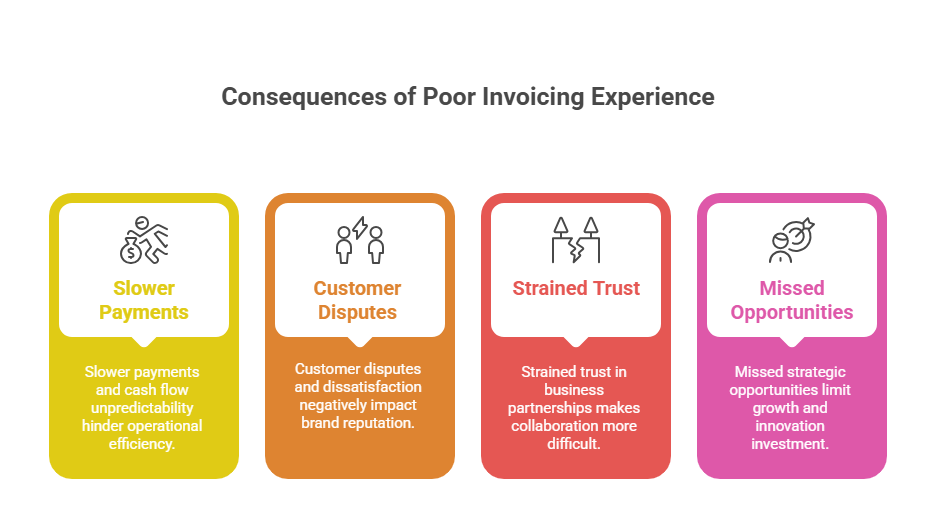
The ripple effects of manual invoicing extend beyond operational delays. For CFOs and finance leaders, poor invoicing practices have tangible financial and strategic consequences:
- Slower payments and cash flow unpredictability: Delays in invoice approval or errors increase Days Sales Outstanding (DSO), affecting working capital and liquidity planning.
- Customer disputes and dissatisfaction: Clients encountering repeated billing errors may question your reliability, potentially weakening long-term relationships.
- Strained trust in business partnerships: In the UAE’s relationship-driven market, trust is a key factor in repeat business and strategic collaborations. Inconsistent invoicing undermines credibility.
- Missed strategic opportunities: Inefficient O2C processes can limit a company’s agility in responding to market opportunities or negotiating favorable terms with clients.
For example, a UAE-based trading company dealing with multiple free zones may face delays in reconciling invoices due to inconsistent VAT handling. Each dispute not only delays payment but also affects customer satisfaction and confidence.
Digital Invoicing as a Solution
Digital invoicing and automation address these challenges by streamlining the entire O2C process while ensuring compliance with UAE VAT regulations. By implementing e-invoicing solutions, finance teams can deliver faster, more accurate, and transparent billing experiences that directly enhance customer satisfaction.
Key benefits include:
- Faster invoice processing: Automation ensures invoices are generated and sent instantly, reducing delays and accelerating payments.
- Accuracy and compliance: Digital solutions minimize errors, accurately calculate VAT, and maintain records aligned with UAE regulatory requirements.
- Transparency and real-time tracking: Clients gain visibility into invoice status through self-service portals, reducing inquiries and enhancing trust.
- Improved dispute resolution: Automated workflows allow quick correction and approval of invoices, minimizing friction in client interactions.
Leading UAE organizations across logistics, trading, and professional services sectors are leveraging digital invoicing to strengthen client relationships. By providing transparent, timely, and accurate billing, these companies reinforce credibility and demonstrate a commitment to customer-centric finance.
Strategic Benefits for UAE CFOs
Beyond operational efficiency, digital invoicing delivers measurable strategic advantages:
- Reduced DSO and improved cash flow predictability: Faster invoice processing ensures timely payments, freeing working capital for strategic investments.
- Enhanced client loyalty: Accurate, transparent, and easy-to-track invoices foster trust and encourage repeat business.
- Operational agility: With automated O2C processes, finance teams can respond quickly to client inquiries, changes in regulations, or market fluctuations.
- Competitive differentiation: In a service-oriented market, a seamless invoicing experience becomes a differentiator that strengthens a company’s brand reputation.
By adopting digital invoicing solutions for better customer service, UAE-based CFOs can transform routine financial processes into strategic touchpoints that enhance customer experience, reinforce trust, and support long-term business growth.
Conclusion: Future-Proofing Finance in the UAE
For CFOs and finance leaders in the UAE, digital invoicing is more than a compliance or efficiency tool—it is a strategic enabler of superior customer experience. Automation ensures timely, accurate, and transparent invoicing, directly impacting client satisfaction and loyalty.
Enhancing customer experience with e-invoicing allows businesses to manage VAT requirements effortlessly, optimize cash flow, and maintain credibility in a competitive, relationship-driven market. As UAE companies align with global best practices in financial automation, digital invoicing becomes an essential pillar for future-ready finance operations, positioning organizations as reliable, customer-focused partners.
Investing in digital invoicing today is an investment in both operational excellence and lasting client relationships—turning every invoice into an opportunity to build trust, efficiency, and strategic advantage.
Read our next blog – Click here