Is Manual Compliance Management Exposing Your SNF to Audit Risk and Regulatory Gaps?
SNF compliance automation helps facilities maintain audit readiness, standardize documentation, and reduce regulatory risk without adding administrative burden.
Download Free Guide
Why Compliance Automation Matters for Skilled Nursing Facilities
Compliance challenges affect more than audits they impact operations, staffing, and leadership confidence.
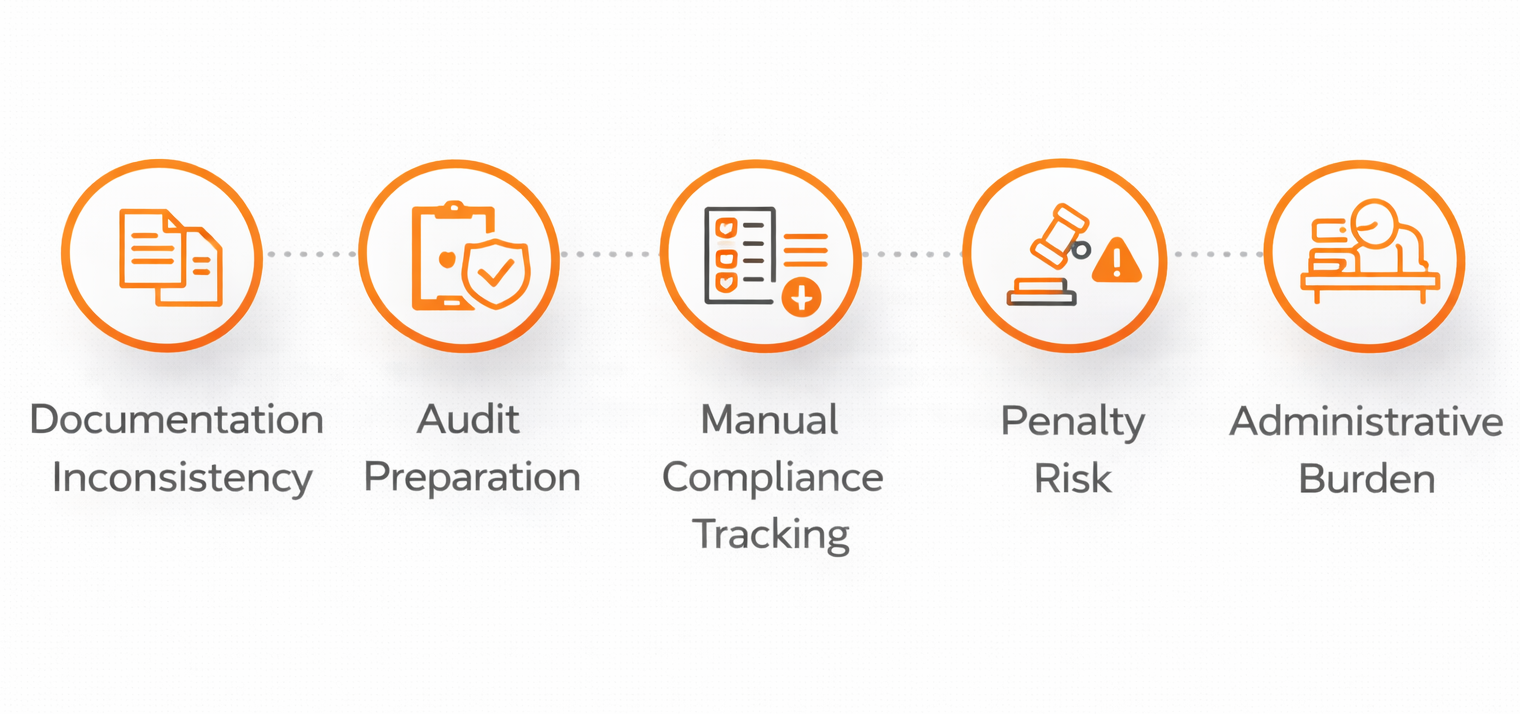
What Is SNF Compliance Automation?
SNF compliance automation uses technology to manage regulatory requirements, documentation, and reporting in a coordinated way.
Instead of relying on manual checks and spreadsheets, automation:
Standardizes compliance-related documentation
Tracks regulatory requirements automatically
Supports audit-ready reporting
Reduces reliance on manual follow-ups
This creates a stronger foundation for skilled nursing facility compliance management.
Where Compliance Automation Delivers the Most Value
How Compliance Automation Improves Audit Readiness and Risk Control
Manual compliance processes often surface issues too late. With automated SNF compliance workflows, facilities can:
What to Look for in SNF Compliance Automation Solutions
When evaluating B2B SNF compliance automation platforms, facilities should focus on: