
The Secure RCM Foundation: Why Encryption and Access Control Now Define Financial Stability
Financial integrity demands more than perimeter defenses. Download this executive blueprint to implement pervasive encryption and least-privilege access transforming security from a compliance burden into a durable safeguard for revenue stability and patient trust.
Download Free Guide
U.S. Healthcare Operational Pain Points
Uncontrolled access and unencrypted data stores are quietly eroding RCM performance while amplifying financial risk.
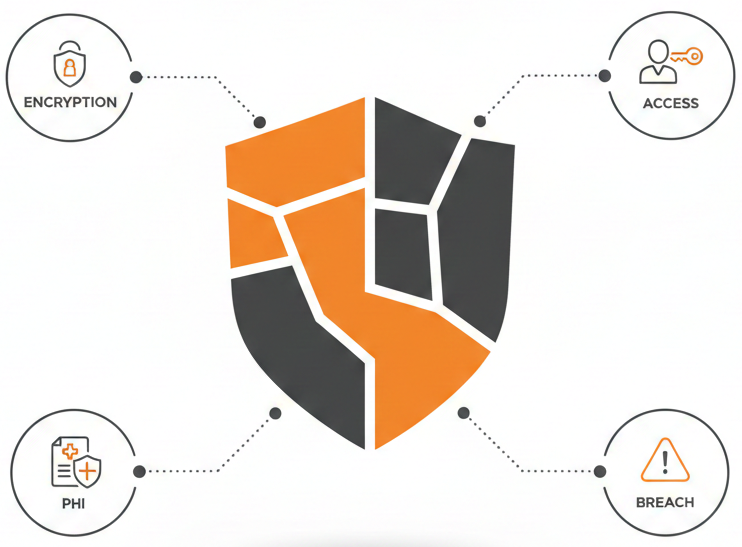
Across hospitals and health systems:
Why This Topic Matters Now
Healthcare leaders are facing simultaneous pressure from:
To scale RCM automation, accelerate clean claims, and protect margins, security must be architectural not reactive.

What You’ll Learn Inside the Executive Blueprint
This strategic guide delivers a leadership-level framework for securing modern RCM operations, including:
Who Should Read This
This executive blueprint is designed for U.S. healthcare leaders responsible for revenue integrity, compliance, and enterprise risk, including:
Security Maturity: Before vs. After
| Metric | Before Strategic Implementation | After Secure Architecture |
|---|---|---|
| Time to Audit-Ready Status | Weeks of manual preparation | Immediate, automated reporting |
| PHI Encryption Coverage | Partial (primarily in transit) | 100% (at rest, in transit, in use) |
| Staff Time on Access Management | High manual effort | Reduced by ~80% via automation |
| Data Breach Exposure | High due to over-provisioning | Dramatically reduced with ABAC |
Why ValueDX: Outcomes, Not Tools
ValueDX delivers a security-first implementation blueprint for AI-driven RCM.
We don’t provide generic tools we architect: