
Stop Financial Leakage: Revenue Integrity Explained for Healthcare Leaders

Download this strategic brief to understand the modern Revenue Integrity model and learn how leading health systems achieve predictable cash flow and a sub-2% Net Denial Rate.

Download Free Guide


    U.S. Healthcare Operational Pain Points

    The traditional Revenue Cycle Management (RCM) model is no longer sustainable.
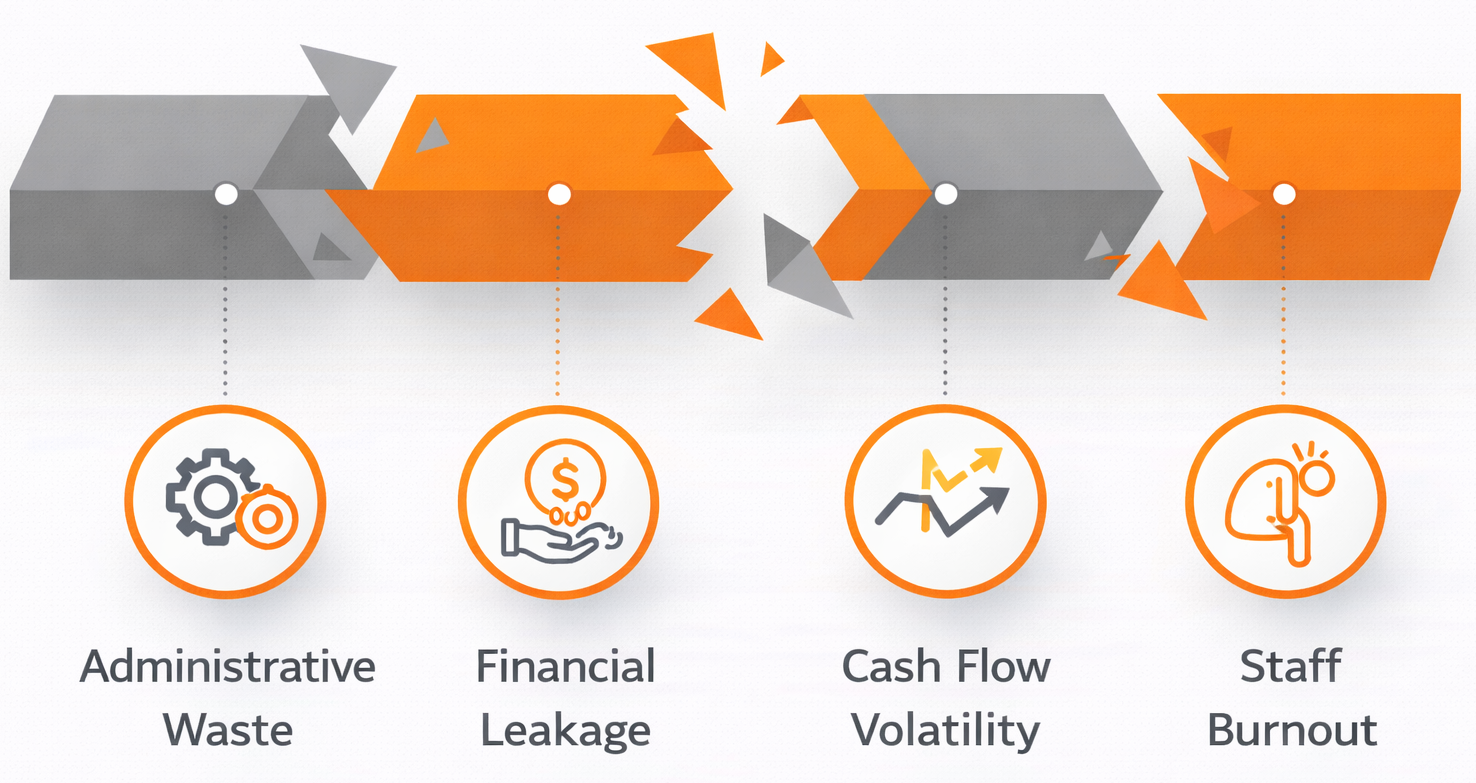
    Revenue Integrity Explained

    Healthcare platforms are facing:

    • Excessive administrative waste driven by manual billing, rework, and downstream corrections
    • Systemic financial leakage from inconsistent charge capture and coding variability
    • Volatile cash flow caused by extended A/R days and unpredictable collections
    • Escalating staff burnout as teams spend more time fixing errors than preventing them

    Why This Topic Matters Now

    Hospital operating margins are under unprecedented pressure.

    Labor costs and inflation continue to rise
    Payor rules are more complex and unforgiving
    Regulatory scrutiny (HIPAA, CMS) demands verifiable accuracy and compliance

    What You’ll Learn Inside the Strategic Guide

    This executive brief delivers a practical blueprint for proactive revenue management, including:

    Who Should Read This

    This strategic brief is essential for healthcare leaders accountable for financial performance and operational efficiency:

    • Chief Financial Officers (CFOs)
    • Chief Operating Officers (COOs)
    • VPs and Directors of Revenue Cycle Management
    • Hospital and Health System Presidents

    Why ValueDX

    ValueDX partners with healthcare leaders to build financial resilience by design.

    We don’t sell generic software we deliver a consultative framework that:

    Eliminates administrative waste
    Reduces denials at the source
    Makes hospital revenue predictable and defensible

    FAQs

    It is a strategic framework that ensures every service delivered is accurately captured, coded, billed, and collected—preventing revenue leakage across the RCM lifecycle.

    By implementing preventive controls, intelligent automation, and measurable integrity checks that stop errors before claims are submitted.
    Predictive validation, real-time charge capture, denial prevention logic, and continuous performance monitoring.
    By eliminating documentation gaps, charge inconsistencies, and coding errors that lead to avoidable denials.
    Fragmented systems, manual processes, lack of root-cause visibility, and reliance on retrospective audits instead of preventive controls.

    Revenue Integrity Explained for Healthcare Leaders

    Stop leakage. Reduce denials. Build predictable hospital revenue.