The Value Imperative: Move Beyond Assumptions and Prove ROI from AI Agent

Artificial intelligence is reshaping healthcare operations—but leadership still demands proof. This strategic guide, Measuring ROI from AI Agent Automation, delivers a structured, consultant-grade framework to help hospitals quantify, validate, and communicate the financial impact of AI across revenue cycle and operational workflows.

Download Free Guide


    U.S. Healthcare Operational Reality

    • Healthcare executives face growing scrutiny over technology investments.
    • Rising labor expenses, increasingly complex revenue cycle workflows, and persistent revenue leakage caused by manual processes continue to compress margins.
    • Without a clear methodology to quantify AI-driven value, automation initiatives risk being perceived as operational expenses rather than strategic assets.
    Measuring ROI from AI Agent Automation Framework

    Why This Matters Now

    Why This Matters Now
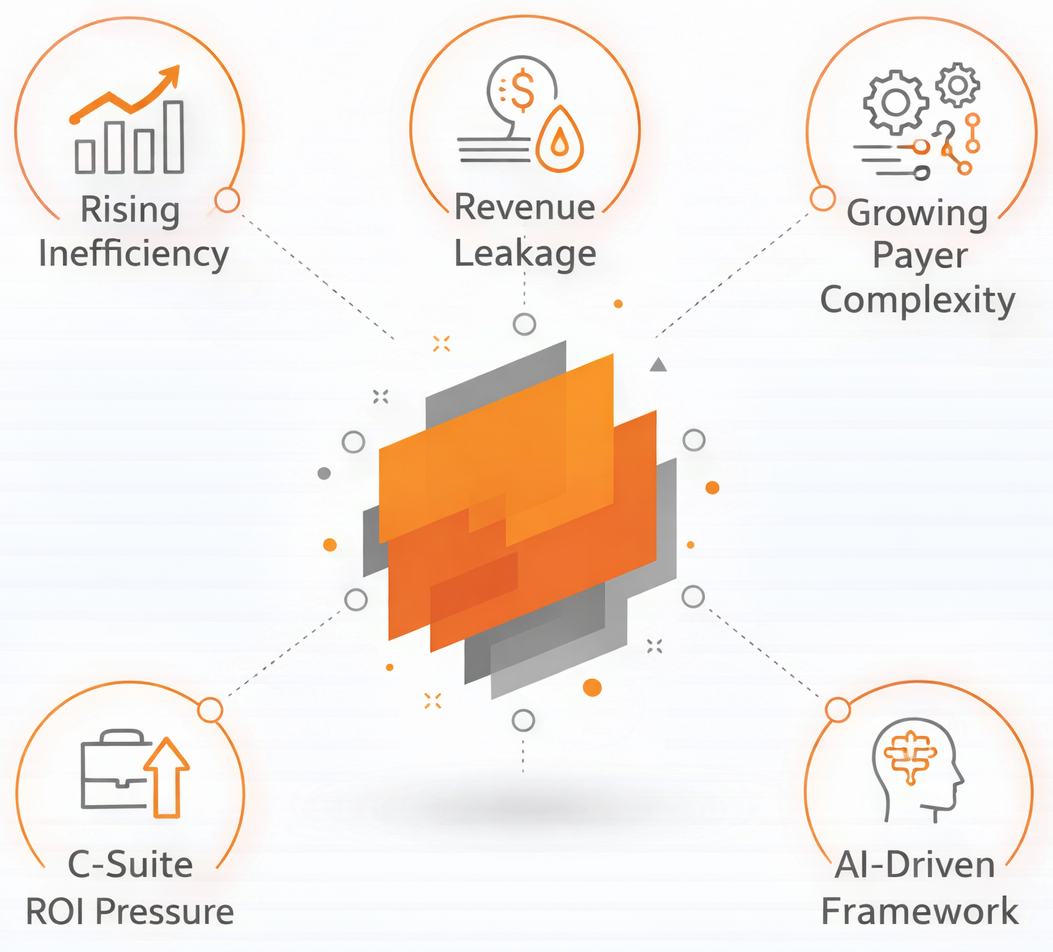
    • Administrative inefficiency and revenue leakage have reached unsustainable levels.

    • As payer rules grow more complex and boards demand measurable efficiency gains, ROI accountability has become a C-suite priority.
    • This guide equips leaders with a practical framework to shift from fragmented cost savings to predictable, enterprise-level returns powered by AI.

    What You’ll Gain from This Guide

    Inside this gated resource, healthcare leaders will find:

    Who This Guide Is Built For

    This resource is designed for U.S. healthcare leaders responsible for financial performance and operational efficiency, including:

    • Chief Financial Officers (CFOs)
    • Chief Operating Officers (COOs)
    • Vice Presidents and Directors of Revenue Cycle Management
    • Hospital Finance, Operations, and Transformation Executives

    Before vs. After: Real Operational Impact

    Sustainable ROI from AI is reflected in core performance metrics:


    Metric Before AI   After  AI 
    Days in A/R Frequently exceed 60 days Reduced to under 40 days in many organizations
    Clean Claim Rate Inconsistent and unpredictable Stabilizes at 98% or higher
    Labor Utilization High-cost effort focused on manual posting and validation Talent redirected toward analytical, exception-based, and strategic work

    Why ValueDX

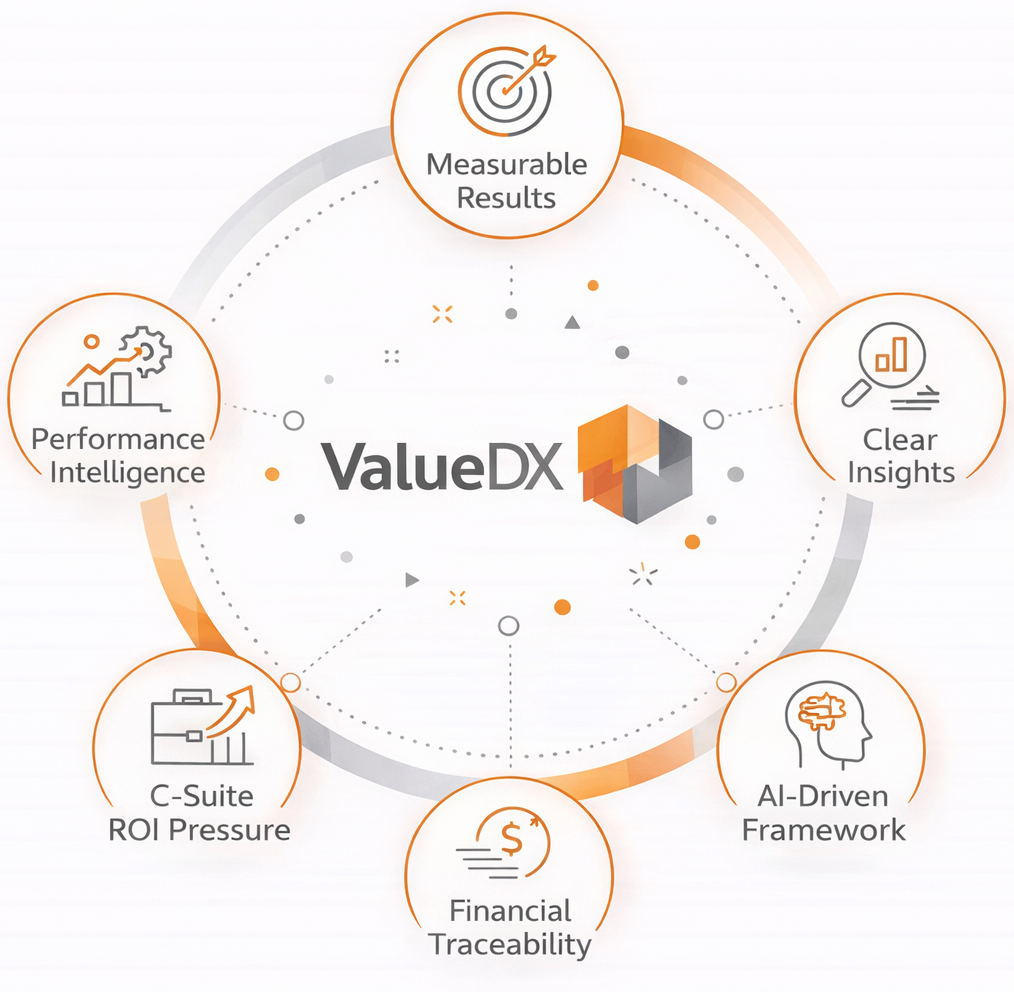
    • ValueDX goes beyond automation technology—we focus on measurable business outcomes.
    • ValueDX platform delivers the transparency, performance intelligence, and financial traceability required to validate AI impact in revenue cycle operations.

    • We help healthcare platforms reframe automation from a technology initiative into a disciplined capital investment.

    ValueDX

    FAQs

    Healthcare platforms can justify AI investments by linking automation outcomes directly to financial metrics such as reduced Days in A/R, increased clean claim rates, lower cost-to-collect, and improved net patient revenue. A structured ROI framework translates operational improvements into dollar impact, allowing leadership to evaluate AI as a measurable financial investment rather than a technology expense.

    The most effective approach is to calculate ROI across three dimensions: revenue acceleration (faster cash collection), cost optimization (labor and rework reduction), and revenue leakage prevention (fewer denials and errors). Combining baseline performance data with post-implementation metrics enables hospitals to quantify both short-term gains and long-term financial returns from automation.
    A strategic ROI framework includes clearly defined financial KPIs, operational performance indicators, and adoption metrics. It also incorporates readiness assessments for process maturity, data quality, and system integration, ensuring that AI deployment is aligned with organizational capability and delivers consistent, repeatable value.
    Hospitals achieve measurable ROI by deploying AI agents in high-volume, rule-driven workflows such as claims processing, payment posting, and eligibility verification. When AI is paired with performance tracking and governance, organizations can continuously monitor impact, optimize workflows, and sustain improvements across the revenue cycle.
    AI improves hospital financial performance by reducing manual effort, minimizing errors, accelerating reimbursement, and increasing visibility into revenue cycle operations. Over time, this leads to stronger cash flow, lower administrative costs, and more predictable financial outcomes—directly supporting margin improvement and long-term financial stability.

    Download the Strategic Guide