Prior Authorization Has Become a Silent Revenue Risk

Prior Authorization failures stem from broken handoffs between EHRs, clearinghouses, and payers, directly impacting revenue and patient access. This guide explains why PA breaks at scale and how providers can restore control and stability.

Download Free Guide


    Operational Challenges Providers Face Today

    High Manual Dependency

    Authorization teams rely on calls, portals, and faxes
    Skilled staff spend time on repetitive follow-ups instead of value-added work

    Upstream Revenue Loss

    Missing or invalid approvals trigger downstream claim failures Denials tied to PA increase rework and delay collections

    System Fragmentation

    Authorization data is scattered across multiple platforms No single source of truth for PA status or documentation

    Patient Access Delays

    Procedures and treatments are postponed due to approval lags Frustration increases for both patients and care teams

    Why Immediate Action Is Required
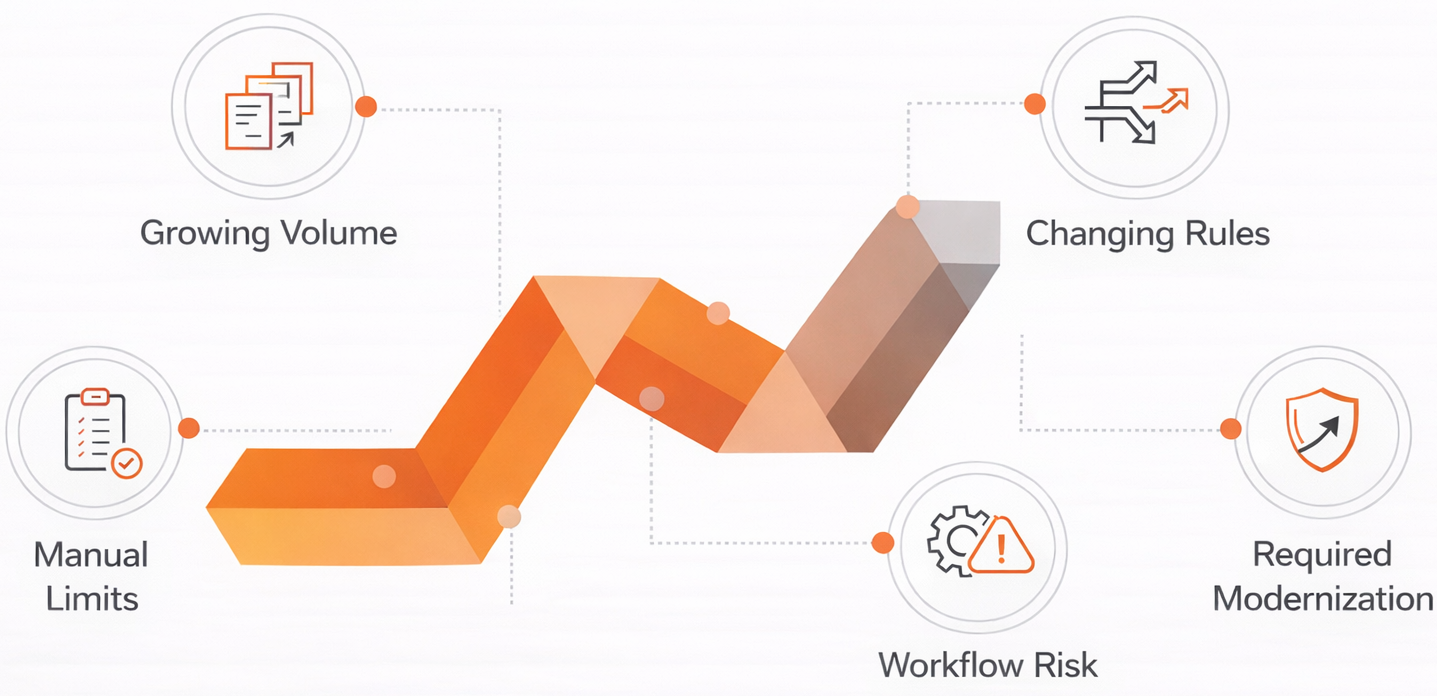
    • Authorization requests continue to grow across services
    • Payer rules change frequently and vary by plan and procedure
    • Manual tracking cannot keep pace with regulatory and payer complexity
    • Inefficient PA workflows now represent material financial risk
    • Modernization is essential to maintain margins and compliance
    How Prior Authorization Breaks Across EHRs Clearinghouses and Payers Flowchart

    What This Guide Delivers

    What This Guide Delivers
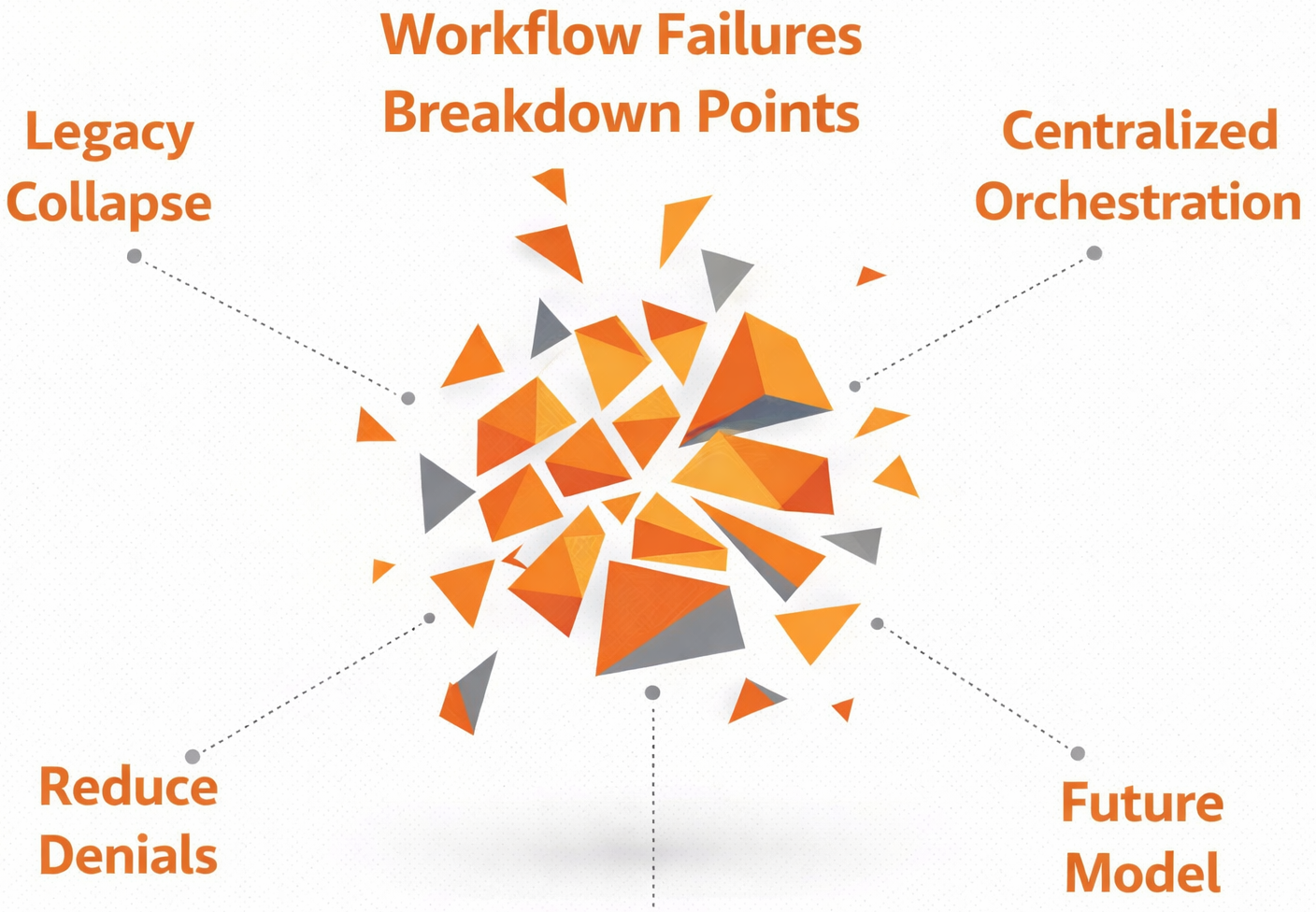
    • A clear explanation of where PA workflows fail between systems
    • Common operational and technical breakdown points
    • Reasons legacy PA processes collapse under high volume
    • A practical framework for centralized PA orchestration
    • Strategies to reduce denials and speed up approvals
    • A future-ready operating model using automation and intelligence

    Business Impact of a Modern PA Model

    FAQs

    It explains why PA workflows break across systems and how to fix them
    Manual processes and disconnected platforms create bottlenecks
    Centralized, rules-driven, and automated orchestration
    It reduces human dependency, errors, and delays
    Faster approvals, fewer denials, and stronger revenue control

    Download the Executive Brief:
    How Prior Authorization Fails Across Healthcare Systems