
How Much Revenue Are Broken EHR–Payer Integrations Costing You?

Hidden integration failures between EHRs and payers quietly drive denials, delays, and lost revenue. This executive brief shows how to quantify the leakage and stop it at the source.

Download Free Guide


    Why This Matters
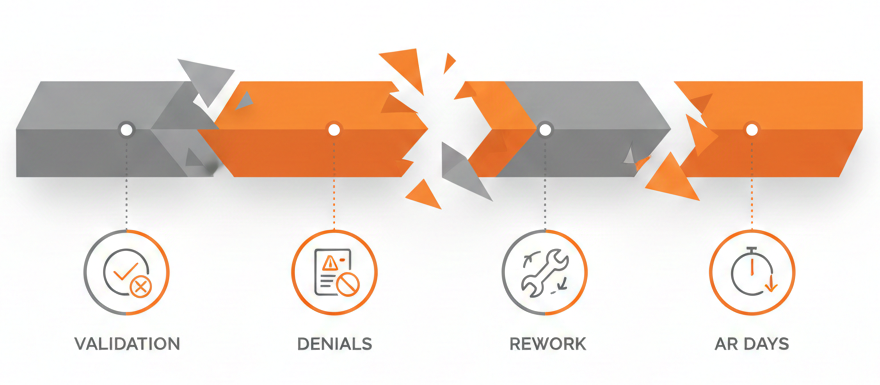
    Revenue Leakage from Broken EHR-Payer Integrations
    • Claims that pass internally but fail payer validation
    • Prior authorization gaps that trigger avoidable denials
    • Manual rework that inflates operating costs
    • Slower collections and rising Days in AR

    What You’ll Learn

    Inside this executive briefing:

    How to calculate annual revenue leakage from EHR–payer failures
    How to calculate annual revenue leakage from EHR–payer failures
    How AI-driven integration prevents errors before submission
    The financial levers that drive rapid ROI and cash acceleration

    Who It’s For

    Built for healthcare leaders responsible for financial performance:

    FAQs

    It is the financial loss caused by incomplete or incorrect data exchange between EHR systems and payers, leading to denials, delayed payments, and write-offs.
    Many EHRs validate claims internally but lack real-time alignment with payer-specific rules, authorization status, and policy changes.
    Yes. Revenue leakage can be quantified by analyzing denial patterns, authorization mismatches, rework volume, and payment delays tied to integration gaps.
    No. Most organizations resolve these issues by adding an intelligent integration layer that enhances validation and data exchange without changing the core EHR.

    Download the Executive Brief

    Quantify your revenue leakage. Stop preventable losses. Improve cash flow.