
When Disconnected Systems Quietly Erode Revenue

This executive brief explains how fragmented healthcare systems create revenue leakage and why these losses are difficult to detect but costly over time.

Download Free Guide


    What System Fragmentation Really Means

    System fragmentation occurs when EHRs, billing platforms, eligibility tools, payer portals, and reporting systems do not share data seamlessly. Information must be manually reconciled, increasing errors and delays.

    How Fragmentation Leads to Revenue Leakage

    These inefficiencies negatively impact patient flow, staff productivity, and revenue cycle performance.
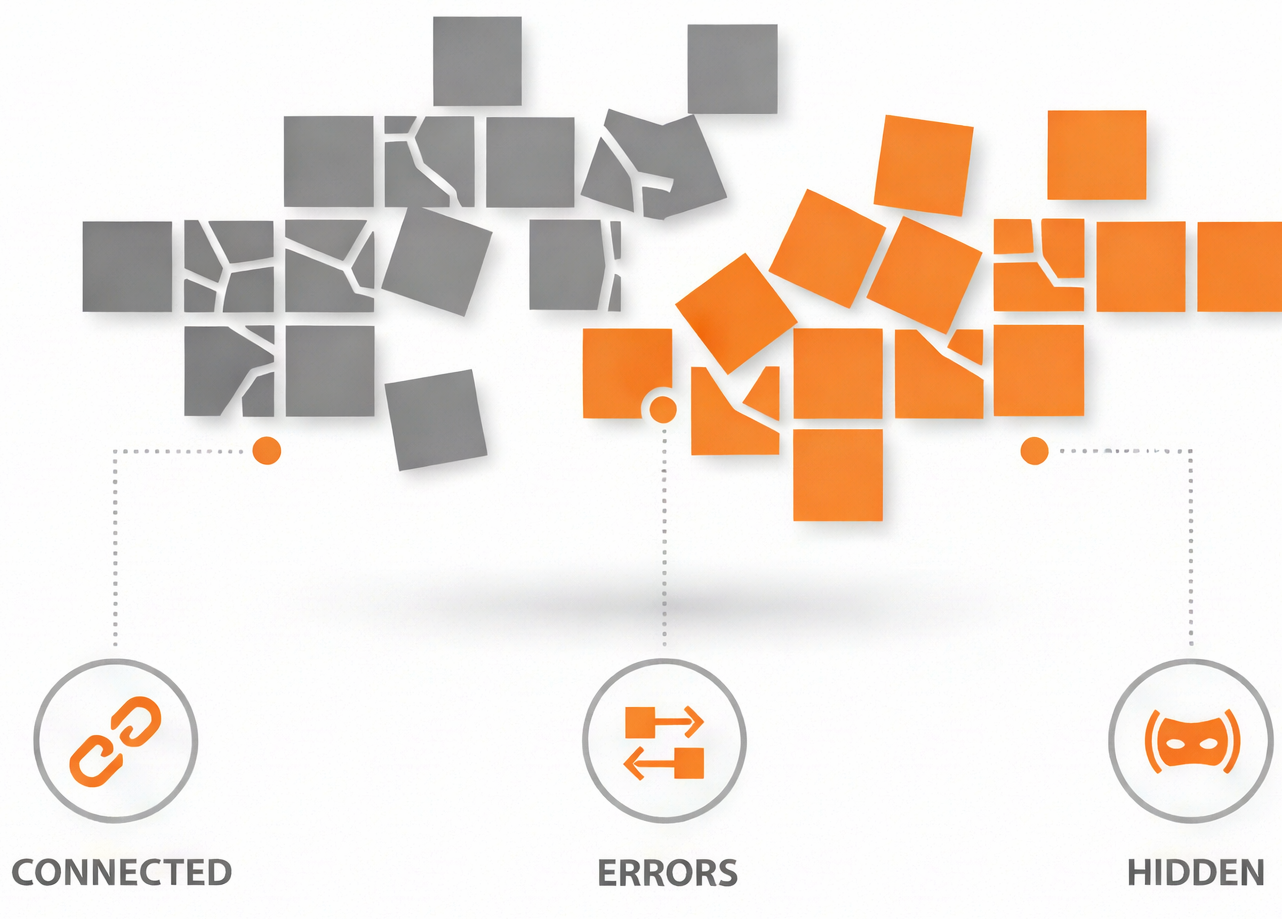
    • Disconnected systems break the continuity of revenue cycle workflows.
    • Errors introduced early—such as eligibility mismatches or missing data—surface later as denials, underpayments, or delayed reimbursement.
    • Because these losses are distributed across processes, they rarely appear as a single, visible issue.
    Fragmented Healthcare Systems Revenue Leakage

    What System Fragmentation Really Means

    System fragmentation occurs when EHRs, billing platforms, eligibility tools, payer portals, and reporting systems do not share data seamlessly. Information must be manually reconciled, increasing errors and delays.

    How Fragmentation Leads to Revenue Leakage

    These inefficiencies negatively impact patient flow, staff productivity, and revenue cycle performance.

    • Disconnected systems break the continuity of revenue cycle workflows.
    • Errors introduced early—such as eligibility mismatches or missing data—surface later as denials, underpayments, or delayed reimbursement.
    • Because these losses are distributed across processes, they rarely appear as a single, visible issue.
    Fragmented Healthcare Systems Revenue Leakage

    Where Revenue Is Lost Most Often

    Fragmentation most commonly drives leakage through:

    Why Revenue Leakage Is Hard to Detect

    Operational and Financial Impact

    Who Should Read This

    FAQs

    Revenue leakage refers to earned revenue that is delayed, reduced, or lost due to operational inefficiencies rather than payer policy or clinical care.
    When systems do not communicate, data errors, delays, and missed actions occur across eligibility, billing, and claims workflows—leading to denials and lost revenue.
    Losses are spread across multiple workflows and time periods, making them difficult to trace back to a single system or process.
    Eligibility verification, billing accuracy, claims follow-up, and denial management are most vulnerable to system gaps.
    Disconnected systems slow reimbursement, increase rework, and reduce predictability—making cash flow harder to forecast and control.
    No. Many revenue losses originate internally due to system gaps, manual handoffs, and lack of operational visibility.

    Make Hidden Revenue Loss Visible

    Understanding how fragmented systems drive revenue leakage is the first step toward protecting cash flow and stabilizing operations.