
Prior authorization delays and denials continue to disrupt healthcare operations, slow patient access to care, and increase administrative costs.
This gated resource explains how automation transforms prior authorization workflows, enabling faster approvals, improved accuracy, and fewer denials.
Download Free Guide
The Challenge: Slow Turnaround Time and High Denials
Healthcare organizations manage increasing volumes of prior authorization requests while navigating complex payer rules and documentation requirements.
Manual processes often lead to:
These inefficiencies negatively impact patient flow, staff productivity, and revenue cycle performance.

Why Manual Prior Authorization Creates Delays
Manual authorization workflows depend heavily on staff coordination and disconnected systems. Common issues include:
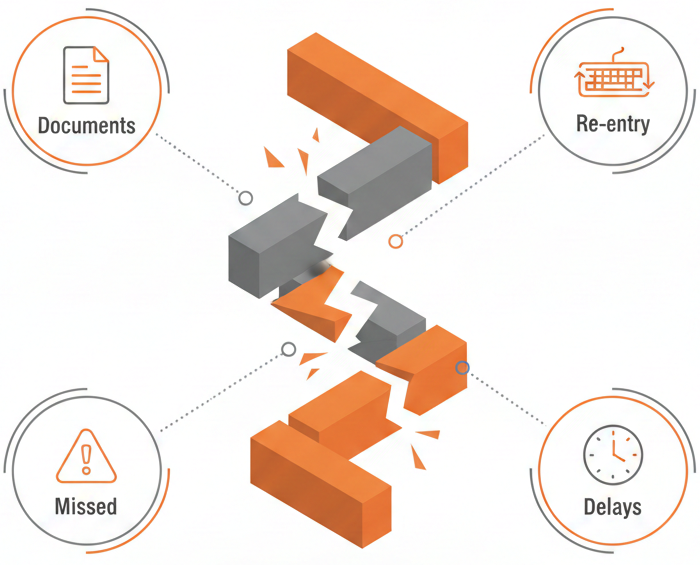
As authorization volume grows, these manual processes become increasingly unsustainable.
How Automation Improves Authorization Turnaround Time
Automation accelerates prior authorization by:
Reducing Denials with Intelligent Automation
Authorization denials often stem from missing documentation or misaligned payer criteria. Automated workflows help reduce denials by:
Role of AI in Prior Authorization Automation
AI enhances automation by introducing intelligence into the authorization lifecycle:
Operational and Financial Impact
By reducing turnaround time and denials, automation delivers measurable benefits:
Why Automation Is Becoming Essential
Healthcare platforms are adopting automated prior authorization solutions to: