The other day, I sat through a webinar that felt less like a presentation and more like someone opening a window in a stuffy room. Around 300 finance folks had logged in—from CFOs in Pune, accounts managers in Bangalore, and even a few auditors from Delhi who confessed they were there “just to see what the hype was about.”
The subject? GST-compliant invoice processing.
Now, if you’ve ever handled accounts payable in India, you already know how this story goes. One missing GST number, one wrong TDS deduction, or one delayed e-invoice submission, and suddenly the entire finance team is scrambling. I’ve personally seen teams in Mumbai literally cancel dinner plans just to “make sure the GST portal doesn’t reject this batch.”
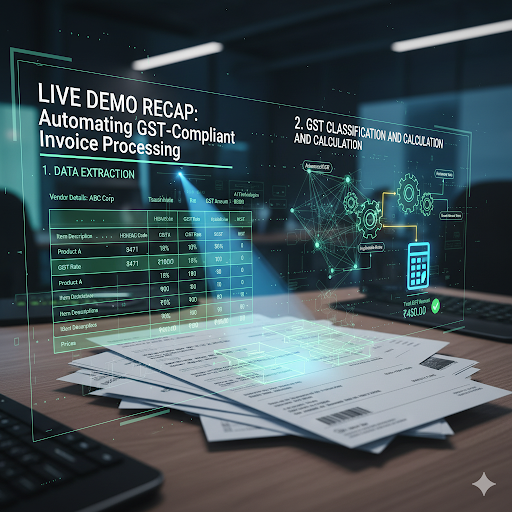
So, yes—this webinar felt like it was speaking directly to that frustration. And the best part? Instead of slides full of jargon, it was a live demo. No theory. No fluff. Just watching invoices go from messy PDFs to GST-compliant records, right in front of us.
The Daily Grind We Pretend to Ignore
Let’s be real for a second. Manual GST invoice processing in India is chaos dressed up as “routine work.”
- Some invoices land in neat PDFs, others arrive crumpled in a courier packet.
- Half of them have to be checked against the GSTN portal, line by line.
- TDS? Don’t even get me started—every time you think you’ve cracked the rule, a new exception pops up.
- And e-invoicing? It’s become another full-time job, uploading and re-uploading files because one small field didn’t match.
During the Q&A, a finance head from Mumbai said something that made the entire chat panel light up: “We blow through ₹8–10 lakhs every year just correcting GST mismatches and dealing with penalties. And no one is counting the lost weekends.”
That comment hit home.
What the Demo Actually Showed
Now here’s the part that made people sit up straighter. ValueDx didn’t just talk about automation—they showed it happening, in real time.
- Invoices of Every Kind
They uploaded three samples: a typed one, a handwritten bill, and a scanned invoice in Hindi. The system picked up details from all three, without needing pre-set templates. - Automatic GST & TDS Validation
As soon as invoices hit the screen, the system ran GST checks against the government portal and calculated the right TDS. No tab-switching, no spreadsheets. - E-Invoicing Integration
Instead of waiting for someone to upload files, the invoices were pushed straight to the government portal. Instant confirmation popped up. - Any Channel Works
Email, WhatsApp, web uploads—however the vendor sent it, the invoice landed in one queue. - The Dashboard
This was the “wow” moment: a live screen showing liabilities in rupees, GST input credits, pending approvals, and a clear 30-day cash flow outlook.
One CFO typed in the chat: “We closed last quarter in 12 days. With this dashboard, we’ll wrap up in 3.” You could almost hear the sigh of relief through the screen.
Manual vs Automated: The Honest Comparison
| Process | Manual GST Processing | With ValueDx |
|---|---|---|
| Invoice Handling | Paper piles, PDFs, courier | Reads any format, any language |
| GST Validation | Line-by-line, error-prone | Auto-check with GSTN instantly |
| TDS Deduction | Frequent mistakes | Rule-based, error-free |
| E-Invoicing | Manual portal uploads | Seamlessly integrated |
| Processing Time | 10–15 days | 1–2 days |
| Compliance Penalties | High, often in lakhs | Negligible |
| Real Cost | ₹10–15 lakhs/year hidden | Outcome-based, no upfront |

A participant from Bangalore summed it up in chat: “This isn’t just automation—it’s survival.”
The Numbers Behind the Stories
The webinar also shared results from actual clients:
- Pune IT Firm – Invoice cycle cut from 14 days to 48 hours; nearly ₹18 lakhs saved in a year.
- Delhi Manufacturer – GST penalties (worth ₹6 lakhs annually) wiped out completely.
- Bangalore Logistics Player – Reduced AP staff from 7 to 3, moving the rest into vendor negotiations and analytics.
These weren’t marketing claims—they were day-to-day outcomes businesses are living right now.
Why ValueDx Felt Different
I’ve seen plenty of “automation demos” over the years, and most left me unimpressed. They looked fine in a U.S. or European context but collapsed when asked about GST, TDS, or Indian e-invoicing.
This session was different. ValueDx clearly built its system with Indian realities at the core. Add to that:
- No upfront costs—outcome-based pricing only.
- Deployment in weeks, not dragged-out projects.
- Works smoothly with SAP, Oracle, Tally, Dynamics—no disruption.
- Pune base with U.S. presence, which makes it local enough to understand, global enough to scale.
One Delhi CFO’s words stuck with me: “Other tools make us change the way we work. ValueDx just fits in.”
More Than Compliance, It’s Sanity
Here’s my personal takeaway: automation here isn’t just about saving lakhs. It’s about giving finance teams their lives back.
I’ve seen managers in Bangalore ordering late-night chai just to keep awake while checking GST mismatches. I’ve watched CFOs in Delhi lose entire weekends to e-invoicing. This isn’t just inefficiency—it’s burnout.
When the demo showed invoices moving from messy PDFs to fully GST-compliant records in minutes, I swear you could feel the relief in the chat box.
Closing Thought
Manual GST invoice processing in India is like running on a treadmill—you put in endless effort, but you never move forward. What ValueDx showed in this live demo is that automation can turn that treadmill into an escalator. Same direction, less sweat, fewer risks.
If you’ve ever drowned under invoices or dreaded the next compliance notice, this is your chance to step off the treadmill.
Read our next blog – Click here