
The Revenue Imperative: Best Practices for Revenue Integrity Teams to Stop Hospital Revenue Leakage
Download this strategic guide on Best Practices for Revenue Integrity Teams to implement proactive revenue assurance, accelerate hospital cash flow, and ensure accurate, defensible patient billing across the entire RCM lifecycle.
Download Free Guide
U.S. Healthcare Operational Pain Points
Fragmented charge capture and manual reconciliation are creating a persistent financial drain on health systems.
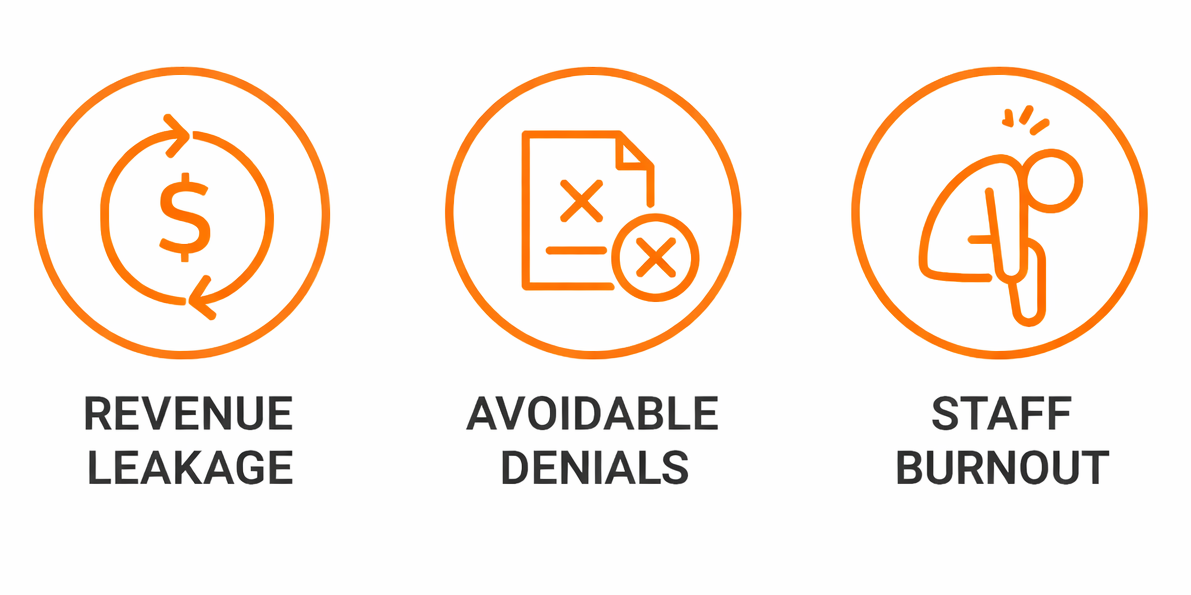
When Revenue Integrity teams are forced to focus on correction instead of prevention, the same problems recur quarter after quarter.
Why This Topic Matters Now
Rising labor costs, increasing payer complexity, and tighter regulatory scrutiny have made revenue assurance a fiduciary responsibility not an operational afterthought.
CMS price transparency requirements and payer audit pressure demand verifiable accuracy across the revenue cycle.
To meet these expectations, Revenue Integrity must evolve from a retrospective audit function into a proactive, technology-enabled strategy that protects margins and ensures compliance.
This guide explains the critical shift from manual vs. automated revenue integrity—and why prevention now matters more than correction.
What You’ll Learn Inside the Strategic Guide
This executive brief delivers a practical blueprint for high-performance Revenue Integrity programs, including:
Who Should Read This
This strategic brief is designed for executive and operational leaders responsible for financial resilience, compliance, and enterprise risk, including
Before vs. After: AI-Driven Impact
| Metric | Before Transformation | After Best-Practice Adoption |
|---|---|---|
| Clean Claim Rate | ~75% | >95% |
| Time Spent on Manual Audits | ~70% | <30% |
| Revenue Leakage Rate | ~1.5% of NPR | Near zero |
Why ValueDX
ValueDX delivers a proven pathway to systemic revenue assurance. We don’t offer point fixes—we help healthcare leaders institutionalize best practices that eliminate leakage at the source.
Our approach enables: