
Govern Your Integrations. Protect Your Revenue.

Uncontrolled data flow between EHRs, clearinghouses, and payers is driving denials, rework, and compliance exposure. Download the executive guide that shows healthcare leaders how integration governance stabilizes revenue performance and reduces avoidable losses

Download Free Guide


    The Revenue Risk You Can’t See
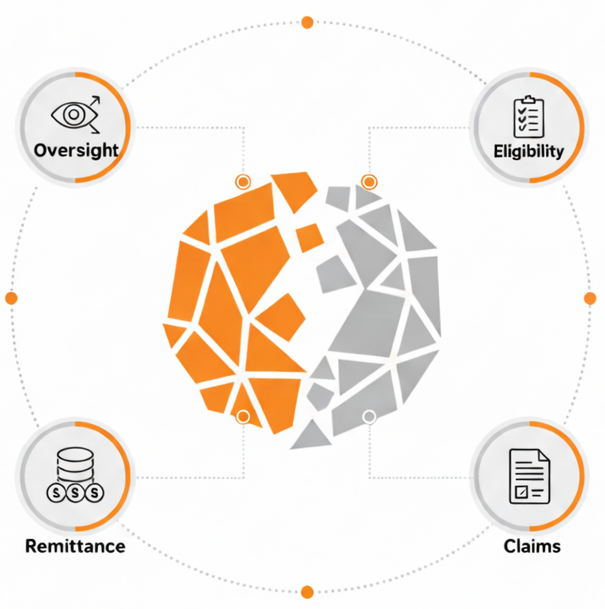
    EHR Payer Clearinghouse Integration Governance
    • Most revenue cycle failures are not clinical or coding issues—they stem from weak oversight of system-to-system transactions
    • When eligibility, claims, and remittance data move without accountability, errors multiply, Days in A/R increase, and staff are forced into constant manual correction
    • Integration gaps quietly erode financial control.

    Why Governance Is Now Mandatory

    Rising regulatory pressure, payer complexity, and margin compression require a shift from reactive denial management to proactive integration control.

    What This Guide Enables

    FAQs

    Integration governance is the structured oversight of how financial and clinical data moves between EHRs, clearinghouses, and payers to ensure accuracy, compliance, and predictable reimbursement.
    Poorly governed integrations lead to eligibility mismatches, data mapping errors, and incomplete transactions, which directly result in preventable claim denials and rework.
    Governance reduces compliance risk by enforcing data quality, traceability, and control across regulated transactions, supporting HIPAA requirements and audit readiness
    Yes. By improving transaction accuracy and reducing manual intervention, governed workflows accelerate payment cycles and lower Days in A/R.
    Effective integration governance requires executive sponsorship, typically led by CFOs and COOs in collaboration with Revenue Cycle, Compliance, and Health IT leadership.

    Download the Executive Guide and regain control of your revenue cycle.