

In today’s fast-paced business environment, efficiency and accuracy in financial operations are no longer optional—they are essential. Many Singaporean companies still rely on manual or semi-digital invoice processing, which slows down operations, increases errors, and creates visibility gaps across accounts payable workflows. By implementing invoice automation, organizations are transforming their financial operations, achieving up to 80% faster invoice processing, and unlocking significant business value.
The Challenges of Traditional Invoice Processing in Singapore
Despite widespread adoption of digital tools in Singapore, manual invoice processing remains prevalent in many organizations. Traditional methods often involve paper invoices, manual data entry, and multiple approval layers, leading to several operational challenges:
- Slow Processing Times: Manually handling invoices requires staff to input data, verify details, and route approvals, resulting in significant delays.
- High Error Rates: Manual data entry is prone to mistakes, which can lead to payment errors, duplicate payments, or delayed reconciliations.
- Limited Visibility: Without centralized systems, tracking invoice status across departments becomes difficult, reducing financial control and transparency.
- Cash Flow Impact: Delays in invoice approvals can slow vendor payments, affecting relationships and limiting the organization’s ability to manage working capital effectively.
- Resource Drain: Finance teams spend excessive time on repetitive, low-value tasks rather than strategic initiatives such as budgeting, forecasting, and analysis.
These challenges not only strain internal resources but also hinder Singaporean companies from maintaining agility in a competitive marketplace.
The Case for Invoice Automation
Invoice automation leverages intelligent software to streamline accounts payable workflows. By integrating automated data capture, validation, and approval routing, companies can drastically reduce manual effort and improve accuracy. Leading automation solutions also provide real-time analytics and reporting, giving finance teams actionable insights into their operations.
Singaporean companies that have adopted invoice automation report significant improvements, including:
- Faster Processing: Invoices can be automatically captured, verified, and routed for approval, reducing cycle times by up to 80%.
- Improved Accuracy: Automated validation minimizes errors from manual data entry, ensuring invoices are processed correctly the first time.
- Greater Visibility: Centralized dashboards provide finance teams with real-time status updates, audit trails, and reporting capabilities.
- Strategic Focus: Staff can redirect their efforts from administrative tasks to higher-value activities, such as cash flow optimization and vendor relationship management.
Real-World Success in Singapore
Several Singapore-based organizations have successfully transformed their accounts payable operations with invoice automation. Consider the following examples:
- A Mid-Sized Technology Firm:
Previously, the finance team spent over 60% of their time manually processing invoices. By implementing an automated solution, the company reduced processing time by 75%, cut errors by 90%, and improved cash flow predictability. - A Retail Chain with Multiple Outlets:
Manual invoice handling across numerous branches caused delays and inconsistencies. Automation enabled centralized invoice capture, eliminating duplicate payments and providing real-time visibility across all locations. - A Financial Services Provider:
With strict regulatory compliance requirements, this firm needed an auditable and transparent AP process. Automation allowed them to maintain compliance effortlessly, generate instant audit reports, and achieve a 50% reduction in invoice approval times.
These case studies highlight how automation not only accelerates invoice processing but also enhances operational efficiency, compliance, and decision-making capabilities.
Best Practices for Implementing Invoice Automation in Singapore
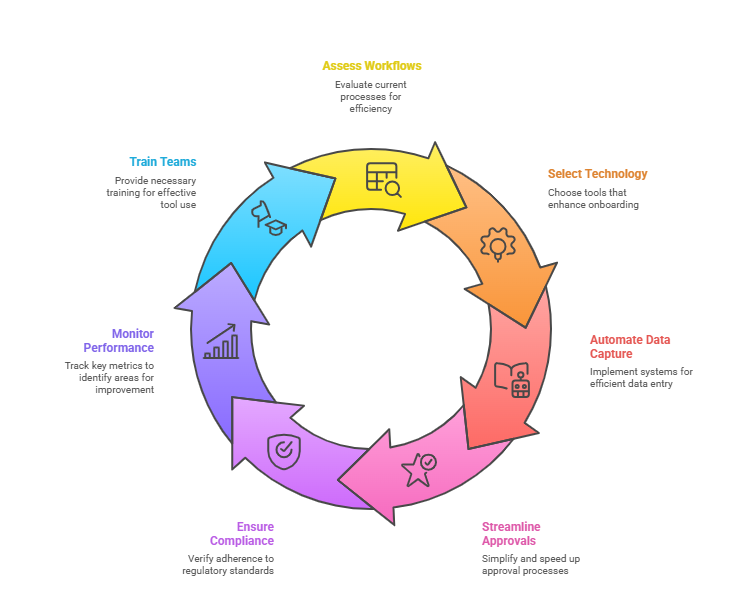
To maximize the benefits of automation, organizations should follow these practical steps:
- Assess Current Workflows: Map out existing invoice processes to identify bottlenecks and inefficiencies.
- Select the Right Technology: Choose a solution that integrates seamlessly with your ERP and accounting systems.
- Automate Data Capture: Implement optical character recognition (OCR) and AI-powered data extraction to reduce manual entry.
- Streamline Approvals: Set up automated routing and approval workflows to accelerate processing times.
- Ensure Compliance: Configure the system to meet Singapore’s financial and regulatory requirements, including GST reporting and audit trails.
- Monitor Performance: Use dashboards and analytics to track KPIs such as invoice cycle time, error rates, and vendor payment timeliness.
- Train Teams: Equip staff with the knowledge to leverage automation effectively while focusing on strategic, value-added tasks.
Measurable Benefits
Companies that adopt invoice automation in Singapore consistently report:
- Up to 80% reduction in processing time
- Significant decrease in manual errors
- Enhanced visibility and control over financial workflows
- Freed-up resources for strategic initiatives
- Improved vendor relationships and on-time payments
By implementing automation, businesses not only enhance operational efficiency but also strengthen their competitive advantage in Singapore’s dynamic market.
Conclusion
Invoice automation is no longer just a convenience—it’s a strategic necessity for companies aiming to stay competitive. Singaporean businesses that embrace automation are able to reduce processing times, improve accuracy, enhance visibility, and empower finance teams to focus on high-value work.
Modernizing accounts payable processes through automation ensures organizations can maintain financial efficiency, improve cash flow management, and respond quickly to market demands. By following best practices and learning from real-world examples, companies across Singapore can achieve faster, more reliable, and more transparent invoice processing—driving overall business growth and success.
Read our next blog – Click here